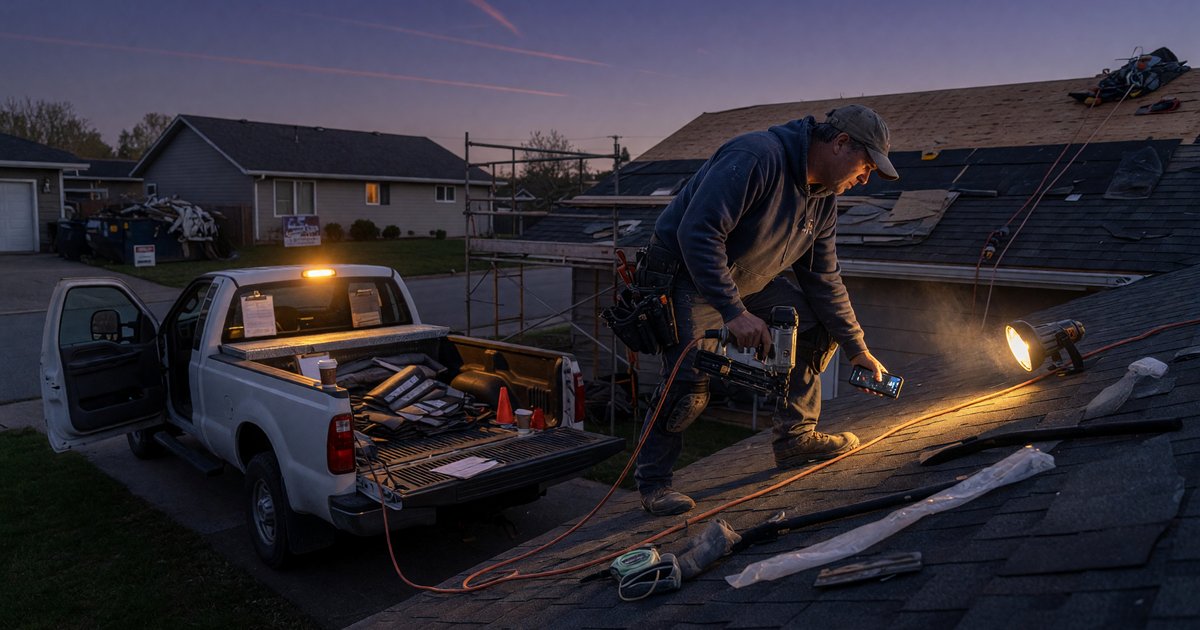
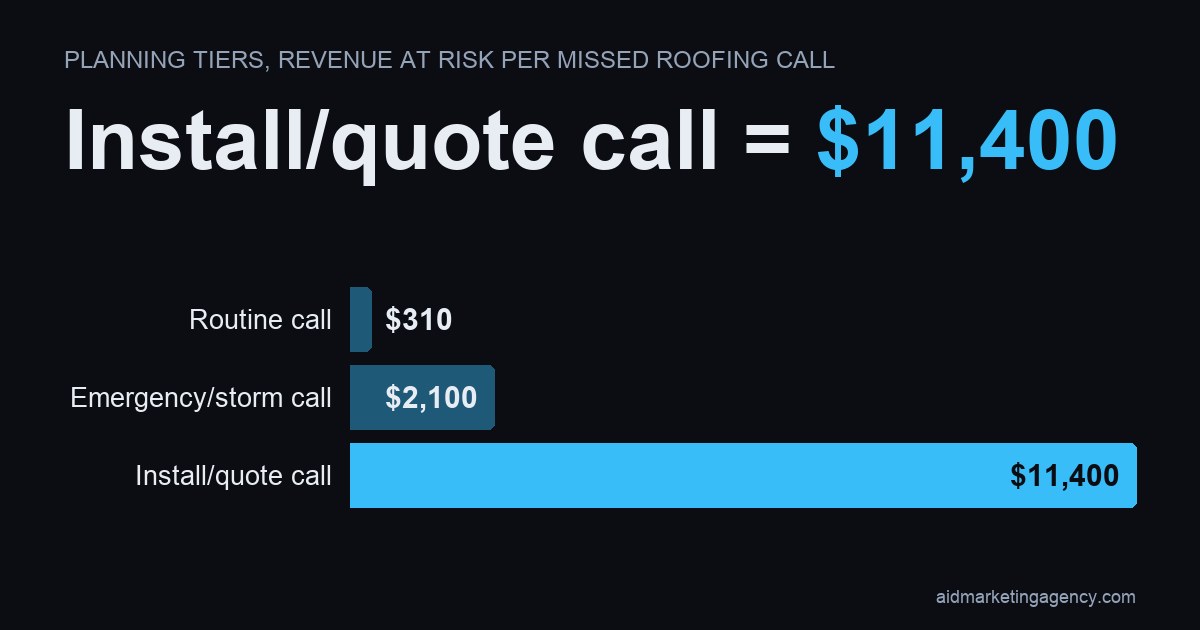
A missed call costs the average home service business about $1,200 in lost revenue (Housecall Pro, 2026), and roofing carries some of the highest exposure of any trade. Across the roofing accounts we run, we plan around three tiers: roughly $310 for a routine call, $2,100 for a storm or emergency call, and $11,400 for a missed install or quote call, in line with the $9,604 national average roof replacement (Angi, 2026). With 27% of calls to home service businesses going unanswered (Invoca, 2023) and lead-response research showing the first company to respond usually wins the job, a roofer missing just one quote call a week can lose more than $590,000 in pipeline over a year, before close rates even enter the conversation.
That number sounds dramatic until you run it against your own call volume. Below, we break down where the losses actually come from, why roofing sits at the top of the exposure list, and a worksheet you can use to build your own number in about five minutes.
The Real Numbers: What Roofers Lose Per Missed Call
Not every missed call costs the same. A homeowner calling about a small repair is a different loss than an adjuster calling about a full storm claim. Nobody publishes a clean per-call loss table for roofing, so we built our own planning tiers from the ticket sizes across the roofing accounts we run, anchored to published job-cost benchmarks like the $9,604 national average roof replacement (Angi, 2026). Roofing comes out ahead of nearly every other trade at each tier.
| Call Type | Revenue at Risk (Roofing, our planning tiers) | Other Trades for Comparison (planning figures) |
|---|---|---|
| Routine service call | $310 | HVAC: $185, Plumbing: $220 |
| Emergency / storm call | $2,100 | HVAC: $1,400, Plumbing: $850 |
| Install / quote call | $11,400 | Remodeling: $24,000 (the only trade higher) |
(These are AID planning tiers, not a published per-call study. Use them as a directional range and swap in your own ticket sizes.)
The pattern is consistent: the bigger the ticket, the more a missed ring costs, and roofing tickets run big across every category, from a single-slope patch to a full tear-off after a hailstorm.
Why Roofing Is the Most Expensive Trade to Miss a Call In
HVAC and plumbing calls tend to be recurring, so a missed call today often just becomes a callback tomorrow. Roofing doesn't work that way. A quote call is usually a one-time decision, the homeowner or property manager is calling two or three contractors in the same afternoon, and whoever gets back to them first usually gets the job. That's why the $11,400 install/quote figure sits second only to remodeling in our planning tiers, well above HVAC and plumbing quote calls.
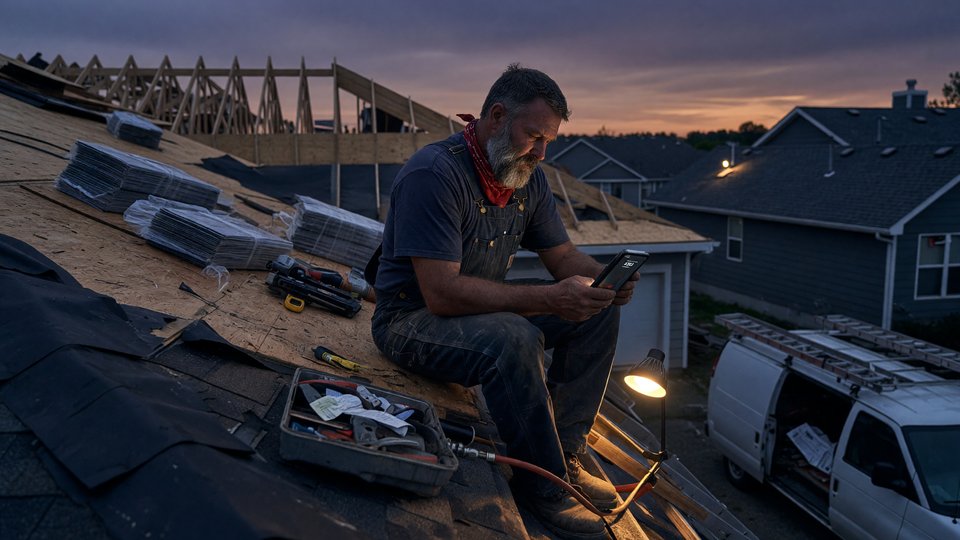
Storm work raises the stakes further. An emergency call after a hailstorm or high wind event often comes with an insurance clock already running, and the homeowner is comparing bids under time pressure. Miss that call and you're not just out one job, you're out of the conversation entirely.
The Math: Missed Calls x Job Value x 52 Weeks x Close Rate
The true cost comes down to a simple formula:
Weekly Missed Calls x Average Job Value x 52 Weeks x Close Rate
The industry per-call averages above already bake in a typical close rate, but your business isn't typical, your job values and close rate are yours. Here's an illustrative example, plug in your own numbers to see where you land:
Example only, adjust to your own figures: if you miss 5 quote calls a week, your average roofing job runs $9,000, and you close 30% of the calls you do answer:
5 x $9,000 x 52 x 0.30 = $702,000 in pipeline that never got a fair shot.
Even a conservative version of that math (2 missed calls a week, a $6,000 average job, a 25% close rate) still lands north of $150,000 a year, before storm-season spikes push it higher. That's exactly why we tell owners to run their own numbers instead of trusting anyone's published average, including ours.
How Many Calls Are You Actually Missing? (Hint: It's More Than You Think)
Most owners guess they miss two or three calls a week. The industry-wide baseline is worse: 27% of all inbound calls to home service businesses go unanswered, per Invoca's analysis of its own call data (2023). Apply that rate to a typical contracting operation's call volume and it works out to more like 5 to 10 missed calls a week.
Across the roofing accounts we run at AID Marketing Agency, that pattern holds up. Crews are almost always missing more calls than they think, and it's rarely because anyone is ignoring the phone on purpose. It's because everyone is on a roof, in a truck, or mid-estimate when the ring comes in, which is exactly when a homeowner is calling three other companies too.
If you want the same math laid out for a different trade, we've run the numbers for HVAC companies and the numbers for plumbers as well, since the underlying formula is the same even though the ticket sizes differ.
The First-Response Problem: Why the First Contractor to Answer Wins the Job
Here's the part that makes missed calls especially expensive in roofing: the first contractor to respond usually wins the job. The MIT-affiliated Lead Response Management Study found the odds of qualifying a lead drop 21 times between a 5-minute response and a 30-minute response (Oldroyd, 2007). Not the cheapest bid, not the most reviews, the fastest response.
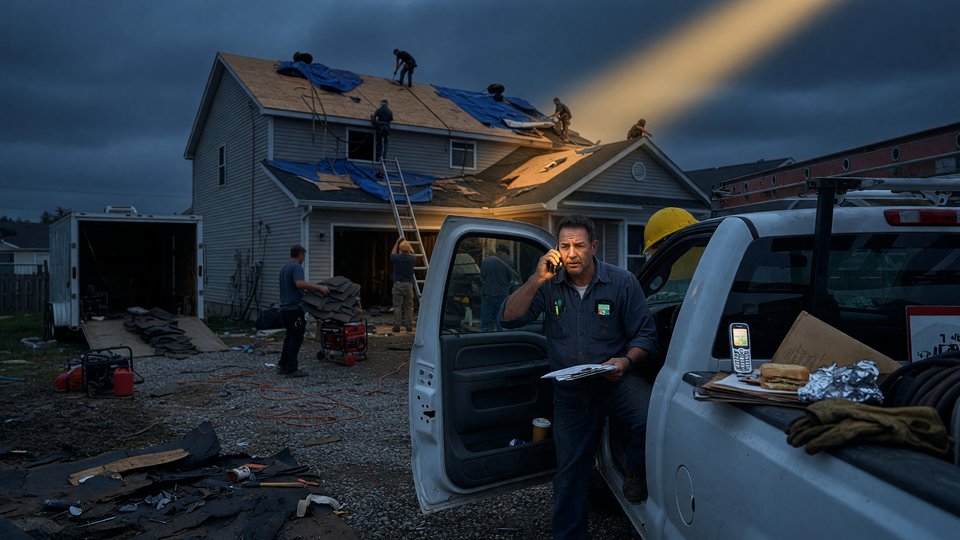
Making it worse, most callers who hit voicemail simply don't leave one, in our experience across the accounts we run. A missed call isn't a delayed lead, it's usually a gone lead. The homeowner has already dialed the next name on their list before your callback even happens.
Storm Season Math: How Missed Calls Balloon Fastest
The averages above are for a normal week. Storm season isn't a normal week. Run the same formula against a storm stretch and the number balloons: three extra missed storm calls a week across a 12-week season, at our $2,100 emergency planning tier, is over $75,000 in exposure on its own, and if even a couple of those calls were full replacement quotes the total clears six figures fast.
That math makes sense once you picture the scenario: a hailstorm hits, phones start ringing from every property in the neighborhood within a few hours, and every one of those calls is a full-value install or claim job, not a routine tune-up. The volume spike and the ticket size spike hit at the same time, which is exactly why storm season is where missed call losses stop being an annoyance and start being a real budget line.
Calculate Your Own Missed Call Cost: A Step by Step Worksheet
Run this on your own numbers before you decide whether it's worth fixing.
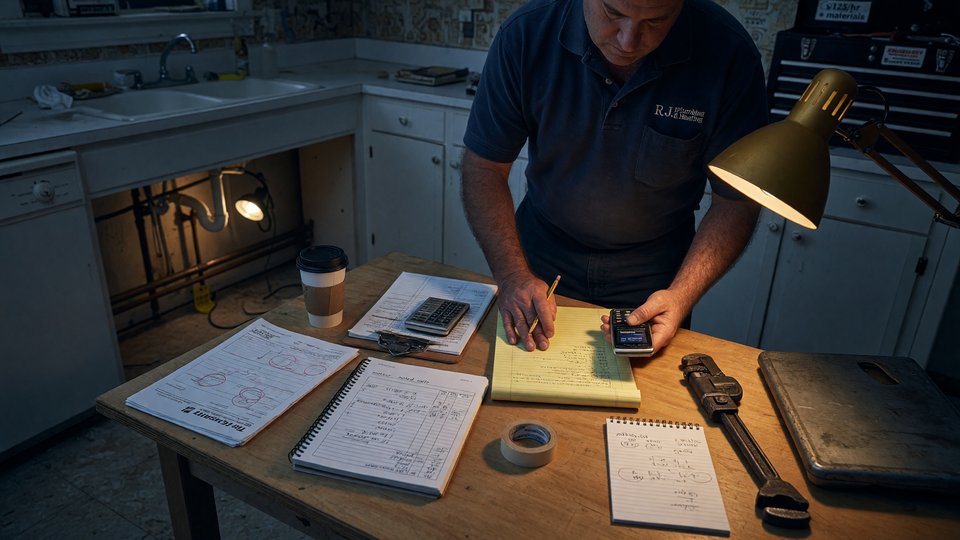
Step 1: Count your weekly missed calls. Pull it from your phone system or CRM log for a real week, not a guess. If you don't track it, start from Invoca's 27% unanswered-call benchmark (Invoca, 2023) applied to your weekly call volume; for a typical operation that lands at 5 to 10 missed calls a week.
Step 2: Set your average job value. Use your actual average ticket across routine, emergency, and install jobs for the last 12 months.
Step 3: Set your close rate. What percentage of calls you DO answer turn into booked jobs? Pull this straight from your CRM's close-rate report if you track one. If you don't, don't guess at a number, in our experience across the roofing accounts we run, this figure swings a lot shop to shop depending on lead quality and follow-up speed, which is exactly why it's worth measuring rather than assuming.
Step 4: Run the formula.
| Input | Your Number |
|---|---|
| Weekly missed calls | ___ |
| Average job value | $___ |
| Weeks per year | 52 |
| Close rate | ___% |
| Annual cost | Weekly missed calls x job value x 52 x close rate |
Most owners who run this for the first time land somewhere in the low-to-mid six figures of annual exposure, depending on how much of their call volume is install and quote work (our $11,400 planning tier) versus routine service (our $310 tier).
What This Means for Your Roofing Business in 2026
The gap between contractors who answer live and contractors who don't is widening, not shrinking, going into 2026; that's the pattern across every account we run. That's not a reason to panic, it's a reason to know your own number. Once you've run the worksheet above, you know exactly what a missed call is worth in your business, which makes it a lot easier to decide what's worth paying for to stop missing them.
If you're weighing whether to fix this with a live answering service, a receptionist, or a system built specifically for how roofing calls actually come in, we broke down that comparison here. Whatever route you take, the math above is the number to build the decision around.