An AI receptionist books the job on the same call. An answering service takes a message and hands it back to you. Voicemail just lets the lead disappear. For contractors handling routine calls (scheduling, pricing, "can you come out today"), AI receptionists answer in under three seconds, work every hour of every day without a shift schedule, and typically run 60 to 80 percent cheaper than a human answering service based on published pricing across the category. Human services still earn their spot for calls that need patience or judgment. Voicemail belongs as a backup, not a front line.
Below are the seven differences that actually decide who gets the booking, plus a straight comparison table, the numbers behind it, and where a mix of both tools beats either one alone.
The Real Cost of a Missed Call for Contractors
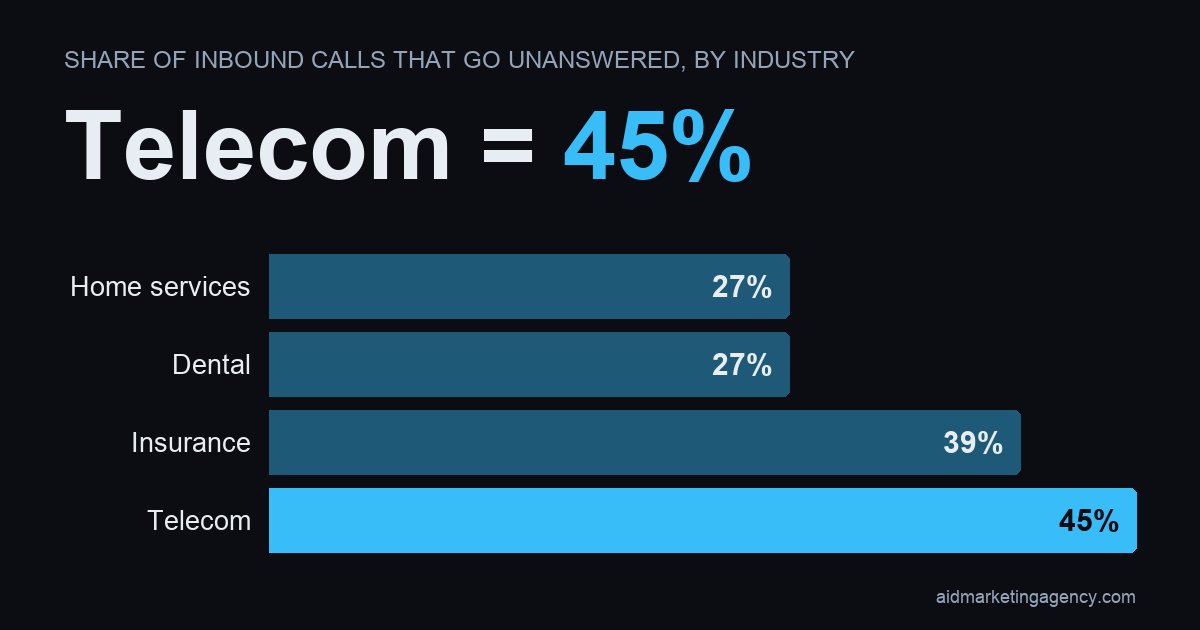
Here is the part most contractors never actually calculate: home service businesses miss about 27 percent of their inbound calls (Invoca, 2023), and the average missed call costs a home service business around $1,200 in lost revenue (Housecall Pro, 2026). Every one of those is a homeowner who called someone, and if you did not pick up, there is a real chance they called your competitor next.
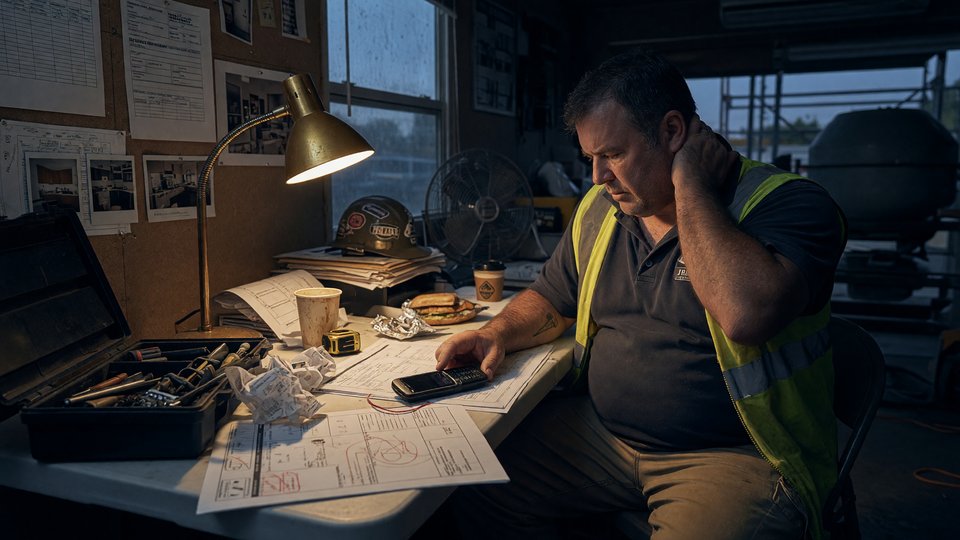
The phone is still the front door for most trades. A truck can be booked solid and a crew can be running smooth, and none of it matters if the call that would have filled next Tuesday went to voicemail and never got a callback.
In our experience building call handling systems for service businesses, the pattern is almost always the same: it is never one dramatic missed call that hurts, it is the slow leak of five or six a week that never shows up on a P&L line. That is the real cost, and it is why this comparison matters more than most contractors think.
Difference #1: Appointment Booking Capability
An AI receptionist connects directly to your calendar. It checks real-time availability, offers a slot, confirms it, and puts it on your schedule while the caller is still on the line. No callback, no double-booking, no "let me check with the boss and get back to you."
An answering service cannot do that. A human answering the phone from a call center does not have your calendar open, so the best they can do is take down the job details and pass you a message. You still have to call the customer back, and that customer is often also calling two other companies while they wait.
Voicemail does not book anything. It just holds a recording until someone remembers to check it.
The Call-Flow Difference, Visualized
It helps to see the friction point at each step.
AI Receptionist: Call comes in -> AI answers on ring one -> Qualifies the caller (service, urgency, address) -> Checks the calendar -> Books the slot -> Confirms by text. Total time: a couple minutes, zero human touch required.
Answering Service: Call comes in -> Agent answers -> Takes name, number, and job description -> Message gets sent to you -> You call back later, if the lead is still available. Total time: minutes on the call, hours (or longer) before the job is actually on your calendar.
Voicemail: Call comes in -> Caller hears the greeting -> Caller decides whether to wait for the beep -> Caller leaves a message, or hangs up. Total time: unknown, because a large share of callers never leave a message at all.
Every extra step is a place a lead can fall out. AI removes steps. Answering services remove one. Voicemail removes none.
Difference #2: Response Speed
An AI receptionist answers in one to two rings, generally under three seconds, with no hold music and no queue. The caller gets a real answer immediately, every single time.
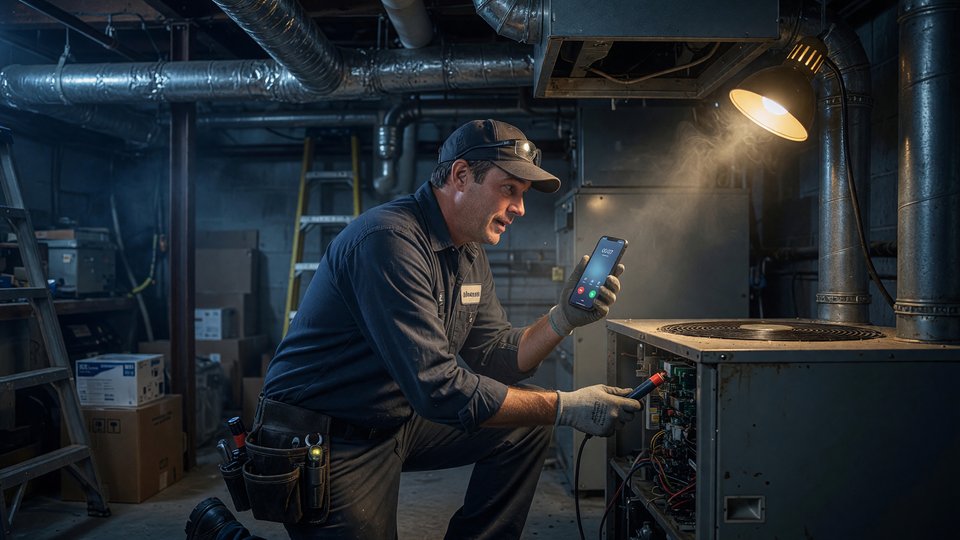
An answering service depends on staffing. If the call center is busy or short-staffed, callers can sit on hold or get routed to whoever is free, which is not always someone who knows your business well.
Voicemail forces the caller to wait through your full greeting before they can even start talking, and by then a chunk of callers have already hung up.
Difference #3: 24/7 Availability
An AI receptionist does not have a shift. It answers the same way at 2 PM on a Tuesday and 11 PM on a Saturday, which matters because plumbing and HVAC emergencies do not wait for business hours.
A human answering service is limited by staffing, and an in-house receptionist only covers so much of the after-hours volume before the line rolls to voicemail anyway.
Voicemail is technically available around the clock, but availability without engagement is not the same thing as coverage. Nobody is qualifying the caller or moving the job forward. It just records.
Difference #4: Cost Structure
This is where most owners perk up. Based on our own 2026 survey of published vendor pricing, AI receptionists typically run on a flat monthly fee somewhere between $25 and $300, or a low per-minute rate around $0.10 to $0.50. Put the per-minute rates side by side and AI generally comes out several times cheaper than a traditional live answering service.
Human answering services usually bill $135 to $1,950 a month depending on call volume, often with setup fees and overage charges layered on top (same pricing survey).
Voicemail is free, but free is not the same as cheap. The opportunity cost of missed and unqualified leads tends to dwarf whatever you saved on the phone system: at the $1,200-per-missed-call home services average (Housecall Pro, 2026), one saved call a month more than covers the subscription.
Difference #5: Lead Qualification
A good AI receptionist does not just answer, it asks: what's the issue, how urgent is it, what's the address, has this happened before. It filters spam and low-value calls before they ever hit your calendar.
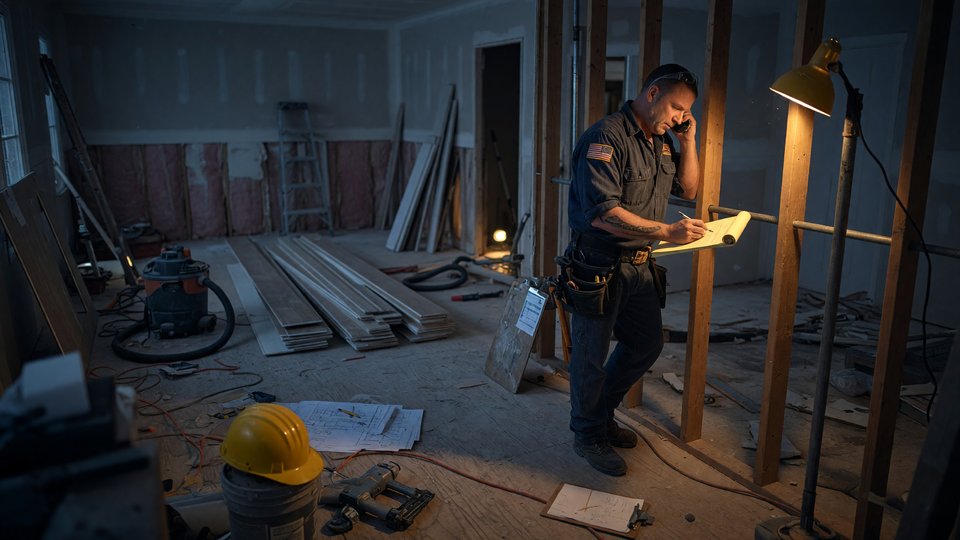
An answering service mostly passes along raw messages. The agent on the phone is not trained on your specific trade, so they capture what the caller says without much filtering.
Voicemail obviously qualifies nothing. A wrong number, a solicitation call, and a real emergency all sound the same in an inbox until you personally listen to each one.
Difference #6: Missed Call Rate
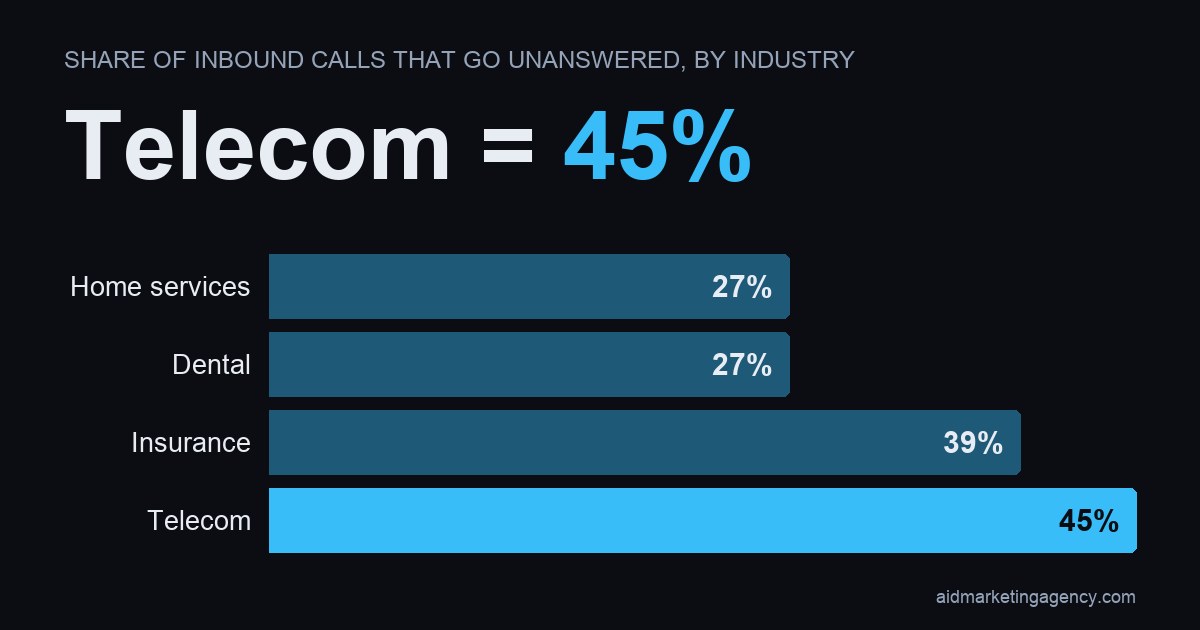
This is the number that should make every owner stop and think. Home service businesses miss about 27 percent of their inbound calls, and plenty of industries run worse: insurance companies miss 39 percent and telecoms miss 45 percent (Invoca, 2023). A properly configured AI receptionist answers effectively every inbound call; catching that missed slice is the whole point of the product.
That gap is the whole argument in one line. If about a quarter of your calls are not getting answered live today, a chunk of your marketing spend is already going to waste before a single lead reaches your calendar.
Difference #7: Best Use Case for Each Option
AI receptionists are built for the calls that repeat all day: scheduling, pricing questions, service requests, and after-hours emergencies where someone just needs a fast, accurate answer. In our experience building call handling for the trades, HVAC, plumbing, and general home services are exactly where adoption is moving fastest, because their call volume is repetitive, urgent, and expensive to miss.
Answering services still hold an edge on empathy-heavy calls: an upset customer with a complaint, a complicated insurance question, a caller who explicitly wants to talk to a person. Judgment calls are still a human strength.
Voicemail is the fallback of last resort, useful only when nothing else is running, and it should not be the plan.
Comparison Table: AI Receptionist vs Answering Service vs Voicemail
| Difference | AI Receptionist | Answering Service (Human) | Voicemail |
|---|---|---|---|
| Appointment Booking | Books instantly into your calendar | Takes a message; you call back | No booking at all |
| Response Speed | Under 3 seconds, no hold | Depends on staffing | Waits for the full greeting |
| Availability | True 24/7, no shifts | Staffing-limited after hours | 24/7 but passive |
| Cost | $25 to $300/month or $0.10 to $0.50/min (2026 pricing survey) | $135 to $1,950/month plus fees (2026 pricing survey) | Free, but costly in lost leads |
| Lead Qualification | Filters and qualifies live | Passes raw messages | None |
| Missed Call Rate | Answers effectively every inbound call | Better than voicemail, still human-limited | Industry baseline: 27% of home service calls go unanswered (Invoca, 2023) |
| Best Use Case | Routine, high-volume calls | Empathy-heavy, complex calls | Last-resort backup only |
Key Statistics Contractors Should Know
- Home service businesses miss about 27 percent of inbound calls; dental practices also miss 27 percent, insurance companies miss 39 percent, and telecoms miss 45 percent (Invoca, 2023).
- The average missed call costs a home service business about $1,200 in lost revenue (Housecall Pro, 2026).
- The odds of qualifying a lead drop 21 times between a 5-minute response and a 30-minute response (Lead Response Management Study, 2007).
- Calling a new lead within one minute lifts conversion by 391 percent (Velocify, The Ultimate Contact Strategy, 2013).
- Based on our own 2026 survey of published vendor pricing, AI receptionists run $25 to $300 a month versus $135 to $1,950 for live answering services, which is where the 60 to 80 percent savings figure comes from.
When a Hybrid Model (AI Plus Human) Makes Sense
For a lot of contractors, the smartest setup is not AI or human, it is AI first and a human as the escalation path. The AI receptionist takes every call, books the routine stuff straight into the calendar, and flags anything emotional, unusual, or high-stakes to a real person on your team.
This matters most for businesses with mixed call volume: a plumber fielding both simple drain clogs and a genuinely upset customer over a failed job needs both tools working together, not one replacing the other entirely.
If you are weighing this for your own business, our guide on how much an AI receptionist actually costs breaks down pricing by call volume, and our piece on missed-call text-back systems for contractors covers the simplest first step if you are not ready for a full receptionist swap yet.
The Bottom Line: Which Option Books You More Jobs
For the calls that make up most of a contractor's day, scheduling, pricing, "can someone come out," an AI receptionist delivers better results at a fraction of the cost of a human answering service, typically 60 to 80 percent lower based on the published pricing above. Answering services still earn their place on the complicated, emotional calls where a person genuinely helps. Voicemail should never be your primary system; it is the one option on this list that actively loses leads instead of just handling them slower.
If you are still relying on voicemail as your main line, that is the fastest fix available and it does not require ripping out anything you already have. Our HVAC and plumbing phone answering guide walks through what a same-week setup actually looks like.