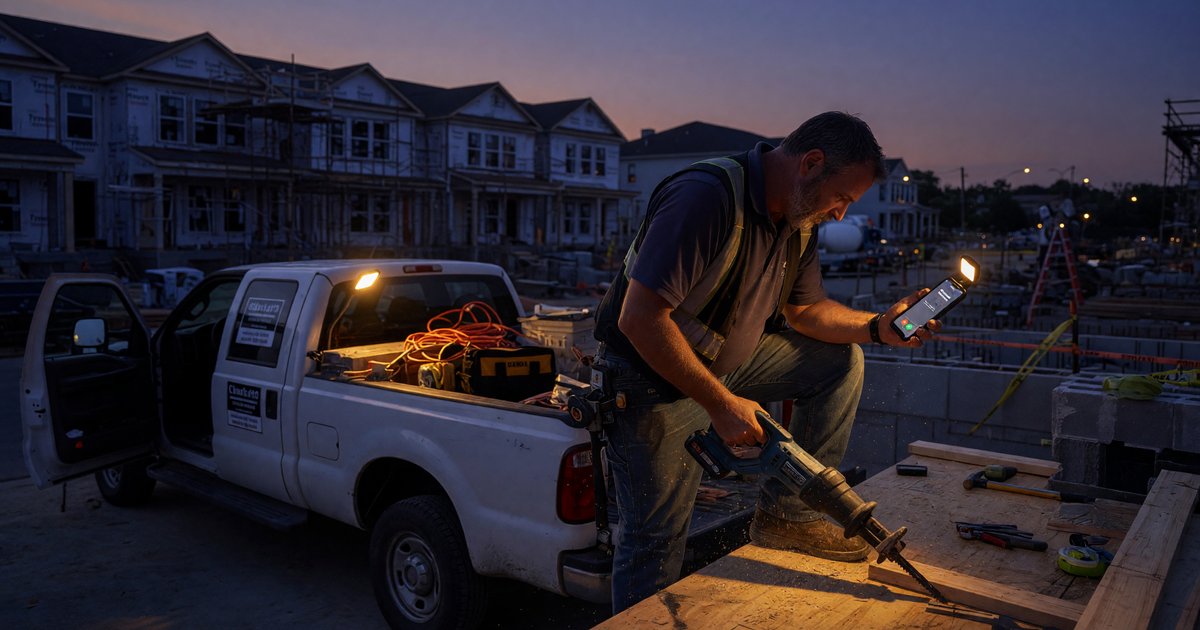
How Charlotte Contractors Win the Missed-Call War: A Speed-to-Lead Playbook
The contractor who answers first usually wins the job, and in a market as crowded as Charlotte, a missed call is a lead handed straight to a competitor. Decades of lead-response research, including the MIT-affiliated Lead Response Management Study (MIT Sloan Management Review, 2011), found that contacting a lead within 5 minutes made firms far more likely to actually connect with that lead and qualify it. That finding is old, but recent contractor-industry reporting still points the same direction: response speed and lead handling remain major differentiators for who books the job (ServiceTitan Research, 2026). This playbook walks Charlotte contractors through a real system for capturing, sorting, and responding to missed calls faster than whoever else is bidding the same job.
The Real Cost of a Missed Call for Charlotte Contractors
A missed call is not a paused conversation. It is a lead moving to the next name on their list, and in most trades that next name answers the phone.

Homeowners calling a roofer, an HVAC company, or a remodeler after a storm or a breakdown are rarely calling just one number. They are calling three or four, and they are booking with whoever picks up, calls back fast, or texts them something useful in the next few minutes. Every ring that goes to voicemail is a small transfer of business to a competitor down the road.
The math is simple even without a precise dollar figure attached: if your crew is on ladders or under a house for half the day, and your phone rings during that window, you are losing a percentage of your inbound pipeline before you ever get a chance to quote it.
The Data: Why Speed-to-Lead Wins the Job (5-Minute Rule Explained)
The foundational research here is the Lead Response Management Study, run with MIT-affiliated researchers and published through MIT Sloan Management Review (2011). The core finding: companies that contacted a web-generated lead within 5 minutes were dramatically more likely to actually reach that person and qualify them, compared to companies that waited even 30 minutes.
That study is more than a decade old, so we treat it as foundational evidence, not a current benchmark on its own. What corroborates it today is more recent: ServiceTitan's residential-trades research (ServiceTitan Research, 2026) continues to flag response speed and disciplined lead handling as some of the clearest differentiators between contractors who grow and contractors who plateau. The technology changed a lot between 2011 and now. The underlying human behavior, that people book with whoever gets back to them first, has not.
For Charlotte contractors, that means the 5-minute window is still the target worth building a system around, even if the tools you use to hit it look nothing like what existed when the original study ran.
Why Charlotte's Competitive Market Makes Missed-Call Recovery Non-Negotiable
Charlotte's contracting market has stayed active and crowded. Local construction outlook reporting from CAGC (CAGC Construction Outlook, 2026) and ABC Carolinas (ABC Carolinas, 2026) both describe a market that keeps evolving, with steady demand across residential and commercial trades and no shortage of companies competing for the same jobs.
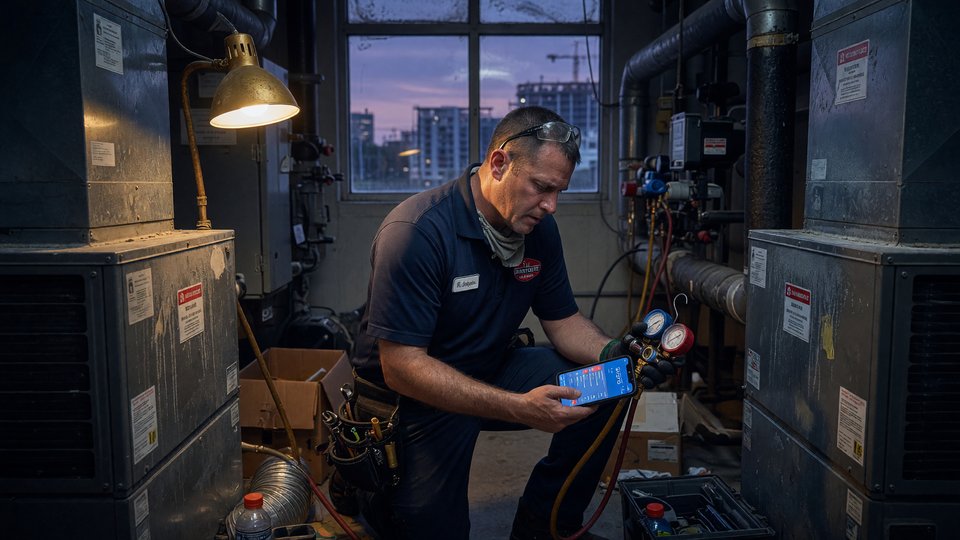
That density cuts both ways. More demand means more leads in the pipeline, but it also means more contractors bidding the same roof, the same kitchen, the same HVAC replacement. When five companies are one search away from each other, the deciding factor often is not price or even reputation. It is who answered the phone, or who texted back, while the other four were still letting it ring.
In a smaller or less competitive market, a missed call might just mean a delayed job. In Charlotte, it usually means a lost one.
The Missed-Call War Playbook: A Step-by-Step Response System
Winning this is not about hiring more office staff or living on your phone. It is about building a system that catches a call the moment it is missed and moves it through four predictable steps: acknowledge, triage, follow up, and close the loop. Here is how each step works.
Step 1: Instant Acknowledgment: Text-Back and Call-Back Triggers
The first move after a missed call should happen automatically, not whenever someone remembers to check voicemail. A missed-call trigger that fires an instant text (something like: "Sorry we missed you, this is [Company], we'll call you back shortly") does two things immediately. It tells the caller a real business is on the other end, and it buys you a few minutes before they dial the next contractor on their list.
This does not require a large system. A basic missed-call text-back workflow, tied to your business line, is often the single highest-leverage piece of this entire playbook because it is the one step that happens instantly, every time, with no one having to remember to do it.
Step 2: Triage: Sorting Real Jobs From Spam and Low-Value Calls
Not every missed call is a $15,000 remodel. Some are robocalls, some are vendors, and some are tire-kickers who were never going to book. Treating every missed call with the same urgency burns out whoever is managing follow-up.
A simple triage layer, even a manual one where whoever checks voicemails first flags calls as "job lead," "vendor," or "spam," keeps your fastest response energy pointed at the calls that actually turn into revenue. If you are using a CRM or field-service platform, most now let you tag and route calls by source, which makes this step close to automatic once it is set up.
Step 3: The 5-Minute Follow-Up Window: Scripts and Workflows
Once a call is flagged as a real lead, the follow-up call or text needs to happen inside that 5-minute window whenever possible, not at the end of the day. A short, plain script works better than a long one:

"Hey, this is [Name] from [Company], saw we missed your call about [service]. When's a good time for me to get you a quote?"
That is it. No pitch, no pressure, just a fast human response that proves someone is actually paying attention. If a live callback is not possible within the window, a text with a specific next step ("Can I call you in 20 minutes, or does a text quote work better?") keeps the conversation moving instead of going cold.
Step 4: Closing the Loop: From First Contact to Booked Estimate
Speed gets you the conversation. It does not automatically get you the booking. Once you have reconnected with the lead, the goal shifts to locking a specific time for an estimate or a quote, not leaving it open-ended.
"Open-ended" is where leads quietly die. "Does Thursday afternoon or Friday morning work better for me to come take a look?" gets a real answer. "I'll get back to you soon" gets ghosted. Close every missed-call recovery with a concrete next step, not a vague promise.
Tools and Tech Stack for Automated Missed-Call Capture
Most of this playbook can run on a basic missed-call text-back tool connected to your business number, paired with a CRM that tags lead source. You do not need a large operations team to run it, and you do not need to rebuild your whole phone system to start.
We put together a full setup walkthrough for exactly this in our automated missed-call capture guide, which covers the specific triggers, text templates, and routing rules that make Step 1 and Step 2 run without anyone babysitting them.
Measuring Your Win Rate: KPIs Every Charlotte Contractor Should Track
You cannot fix what you do not measure. Three numbers matter more than the rest: average time-to-first-contact after a missed call, percentage of missed calls that get a same-day response, and percentage of those that convert to a booked estimate.
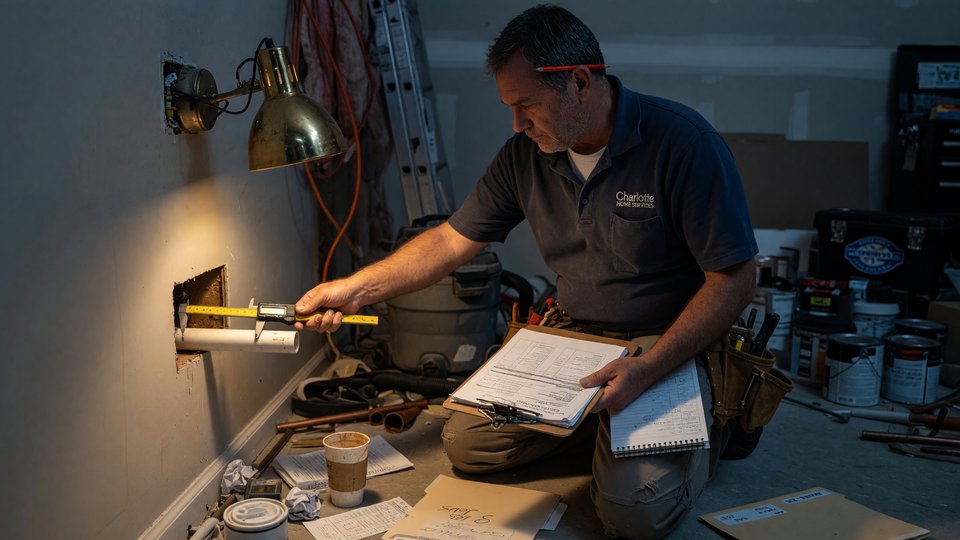
To make this concrete, use the scorecard below to rate where your business actually stands today. Be honest, this is a diagnostic, not a report card.
The Charlotte Missed-Call Scorecard
| Category | Under 5 Minutes (Strong) | Same Day (Okay) | Next Day or Later (Leaking) |
|---|---|---|---|
| First response to a missed call | Automated text or live callback fires immediately | Callback happens later that day | Caller often hears back a day or more later, if at all |
| After-hours and weekend coverage | Missed-call text-back or answering coverage runs 24/7 | Covered during business hours only, weekends are a gap | No coverage outside normal hours |
| Follow-up consistency | Every flagged lead gets a scripted follow-up and a booked next step | Follow-up happens most of the time, inconsistently | Follow-up depends on whoever remembers to check voicemail |
In our experience working with contractor crews here in Charlotte, the biggest gap almost always shows up in that middle row. Weekday coverage is usually fine. Friday evening and weekend calls, when a pipe bursts or a unit dies, are where the leads go to a competitor who happened to be reachable.
Common Mistakes That Lose the Missed-Call War
A few patterns show up over and over. Treating voicemail as the follow-up system, instead of a step before the follow-up system. Letting one person be the single point of failure for every missed call, so a sick day or a busy Tuesday becomes a leak. Sending a generic "we'll be in touch" text with no specific next step, which reads as automated and gets ignored. And chasing every missed call with equal urgency, including the ones that were never going to become real jobs, which burns time that should go to actual leads.
None of these are complicated fixes. They are mostly about building the habit and the automation once, so the system runs the same way whether it is a slow Tuesday or the Friday after a storm.
Building a Repeatable System: Training Your Team to Answer First
Tools solve the acknowledgment step. People still close the estimate. The teams that win the missed-call war consistently are the ones where everyone, not just the office manager, understands that a fast, specific response beats a polished one that arrives an hour later.
We wrote a full breakdown of how to train a small team around this exact habit in our guide on training your team to answer first, including the specific scripts and check-ins that keep response times from sliding once the initial excitement about a new system wears off.
For the bigger picture on how speed-to-lead fits into a full contractor marketing strategy beyond just the phone, our national playbook on speed-to-lead contractor marketing covers how this connects to your website, your Google Business Profile, and paid lead sources. And if your Charlotte-specific online presence needs work too, our Charlotte contractor website and SEO guide is a good next stop.
Ryan McNally is a Charlotte-based contractor and marketer who has run crews, sales, and lead systems across the trades. More about Ryan.