Roofing Marketing in Charlotte: How to Win Storm-Season Leads Before Competitors Do
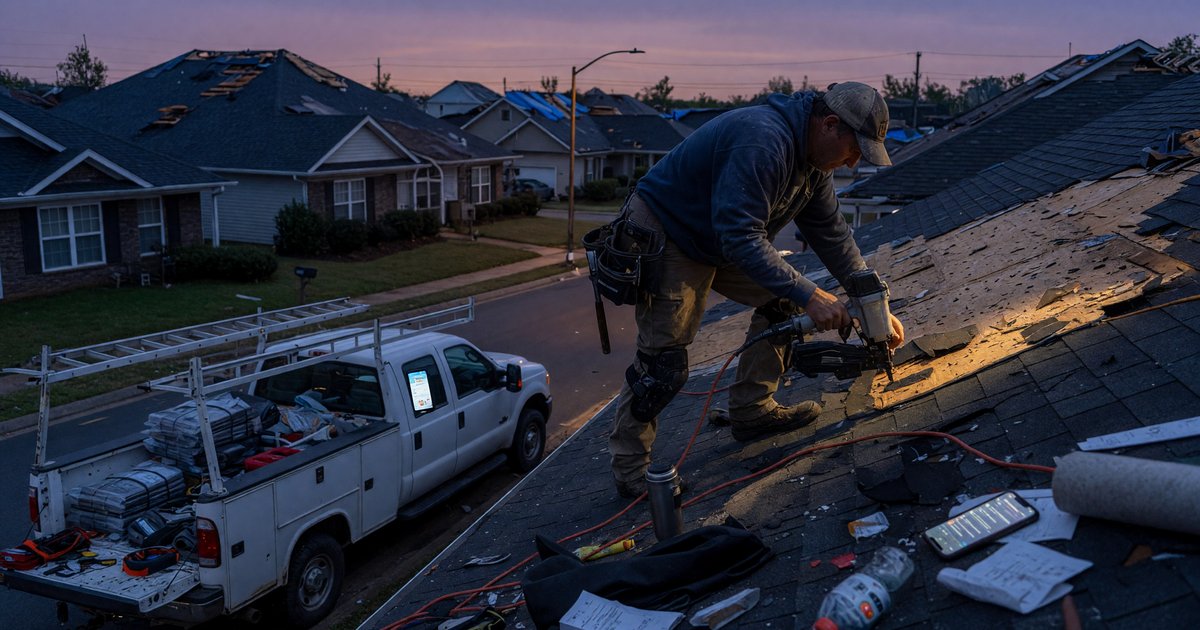
Charlotte's hail and wind events create massive lead surges that most roofing companies lose by waiting hours to respond. The first roofer to reach a homeowner after a storm wins the job. Older research on lead response times shows that contacting a prospect within 5 minutes dramatically increases qualification odds compared to waiting 30 minutes or more, and recent roofing industry commentary continues to reference that benchmark (Roofr, 2026). For Charlotte roofers, marketing spend during storm season is only as good as follow-up speed. This guide breaks down why speed-to-lead is the single biggest lever in roofing marketing for Charlotte companies, and how to build a response system that wins.
Why Charlotte Storm Season Creates a Winner-Take-All Lead Market
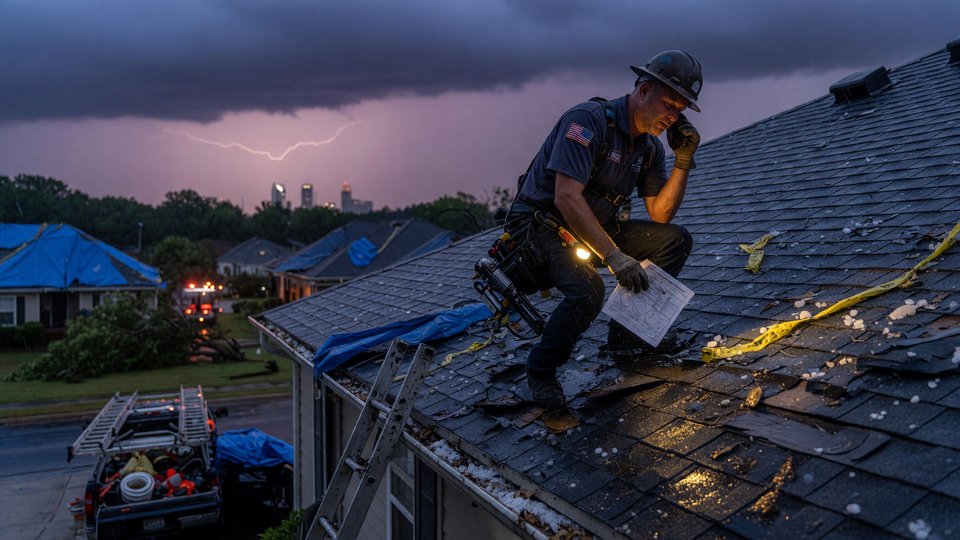
In the Charlotte area, the weather drives roofing demand more than any ad campaign ever could. When a hailstorm rolls through the Piedmont, it does not just damage roofs. It triggers a localized, high-intensity surge of homeowners searching for help, all at the same time. Charlotte's position in the Piedmont means the region faces repeated hail and wind events each year, creating a predictable but volatile cycle of demand.
The problem for most shops is not a lack of leads. It is the inability to handle the sudden volume. When a storm hits, your phone rings off the hook, your web forms fill up, and your email inbox hits capacity all at once. If your team is still running manual follow-ups, you are leaving money on the table. Homeowners who just saw their shingles scattered across the yard are not browsing for the best brand of asphalt. They are looking for the first contractor who picks up the phone.
Think of it like a race. Every roofer in Charlotte gets the same storm. Every homeowner calls three or four companies. The one who answers first gets the inspection, and the other three get voicemail. That is the entire game during storm season.
The 5-Minute Rule: What the Research Actually Says
In roofing, speed is your primary marketing asset. Older research, specifically the Lead Response Management Study from 2007, established a clear link between response time and qualification rates. While the study is older, its findings remain the most widely cited benchmark for home-service businesses. Recent roofing industry commentary continues to reference the 5-minute window as a critical target (Roofr, 2026), though the primary research behind that benchmark dates back nearly two decades.
The data suggests that businesses contacting leads within 5 minutes are significantly more likely to qualify them than those that wait 30 minutes or longer. For a Charlotte roofer, this is the difference between a booked inspection and a lost lead. If you wait until the end of the day to call back the storm leads that came in at noon, your prospect has already spoken to three other companies and probably scheduled one of them.
For a deeper breakdown of the research and how to apply it on a job site, check out The 5-Minute Rule: Why Speed-to-Lead Beats Marketing Spend.
The Follow-Up Gap: Why Most Charlotte Roofers Lose Storm Leads
The industry-reported reality is that most contractors are failing this test. While primary data on Charlotte-specific response times is scarce, industry data from contractor platforms suggests that average response times for home-service businesses are often measured in hours rather than minutes (Housecall Pro, 2025). Call analytics platforms have documented similar patterns broadly, with many businesses taking hours to return a first call (Invoca, 2025).
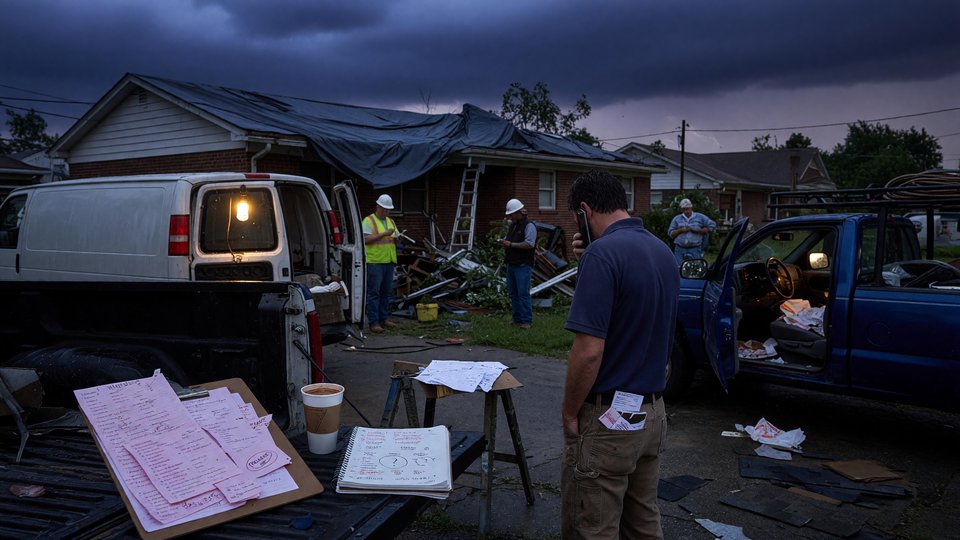
When a homeowner submits a lead, they expect an immediate acknowledgment. If they do not get it, they move to the next name on their Google search results. This gap between the lead submission and the first human contact is where revenue goes to die. If your shop takes 4 hours to return a call, you are not just competing on quality or price. You are competing against the fact that your prospect has already moved on and booked someone else.
The math is brutal in its simplicity. During a storm surge, every hour you delay is an hour your competitor has to build trust, schedule the inspection, and lock in the job. By the time you call back, you are not selling your service. You are trying to undo a decision that has already been made.
Why Storm-Season Leads Decay Faster Than the 5-Minute Rule Suggests
The 5-minute rule was established on steady-state lead data: homeowners planning a renovation, comparing quotes over days or weeks. Storm-season leads behave differently, and understanding that difference is what separates shops that capitalize on weather events from those that just survive them.
A homeowner planning a replacement has a decision timeline measured in weeks. A homeowner with golf-ball-sized hail holes in their roof has a timeline measured in hours. That urgency is not just emotional. It is structural. Within the first 48 hours after a storm, a distressed homeowner may simultaneously be fielding door-to-door canvassers, insurance adjuster recommendations, neighbor referrals, and the three roofers they called from Google. All of those channels can converge on the same homeowner in the same narrow window. By hour two, a homeowner may have already committed to someone, not because that company was the best, but because they were the first to show up and put eyes on the roof.
This means the 5-minute rule, while still the right benchmark, actually understates storm-season urgency. The effective competitive window in a storm surge is not 5 minutes versus 30 minutes. It is 5 minutes versus the canvasser who is already knocking on the door. A shop that responds in 15 minutes during a storm is not 10 minutes late. They are effectively the fifth contractor in the door, and the homeowner stopped counting after the second.
As an illustration, consider a common pattern in storm-affected neighborhoods. A hailstorm moves through south Charlotte on a Tuesday afternoon. By 5:00 PM, a homeowner in Ballantyne has filed three online inquiries and answered two door knocks from canvassers already in the neighborhood. If your shop calls back at 7:00 PM, you are not the second or third contact. You are the sixth. The inspection is likely already scheduled with whoever showed up first. The average roof replacement runs roughly $9,000 to $12,000 depending on square footage and materials (Angi, 2025). When that revenue walks to the first responder, the loss is not theoretical. It is a specific job, on a specific street, that a specific competitor booked because they picked up the phone first.
For a full breakdown of what a missed call costs a roofer in 2026, see What a Missed Call Actually Costs a Roofer in 2026.
Building a Rapid-Response Playbook for Charlotte Roofers
Winning in a storm-heavy market requires a shift in how you handle incoming inquiries. You do not need to hire a massive office staff to hit the 5-minute window, but you do need a system.
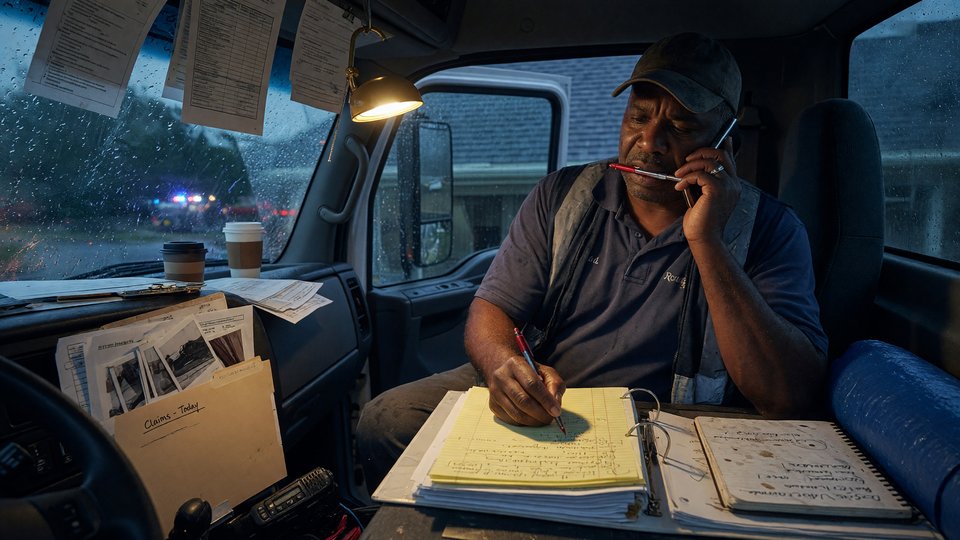
- Centralize your intake. Ensure all leads from your website, social media, and third-party marketplaces flow into a single dashboard. If your leads are scattered across email, text, and voicemail, you will miss the 5-minute window every time.
- Prioritize the first touch. Your goal on the first call is not to close the sale. It is to confirm you received their request and schedule the inspection. Keep it simple, keep it fast.
- Use a missed-call text-back. If you are on a roof and cannot answer, your system should automatically send a text message to the caller. This acknowledges their inquiry and keeps the conversation alive until you can call them back.
- Standardize your qualification. Have a simple script ready. You need to know the address, the type of damage, and the homeowner's availability. Nothing more on the first call.
For a broader look at how Charlotte contractors are solving this problem, read How Charlotte Contractors Win the Missed-Call War.
Automating the First Touch Without Losing the Human Element
Automation is the only practical way to scale your response time during a surge. The goal is not to replace the human connection. It is to handle the initial contact so your team can focus on the inspections themselves.
Many contractors are now using automated systems to handle the immediate follow-up (Roofr, 2026). These tools can identify a new lead, send a personalized text or email within seconds, and even prompt the homeowner to book their own inspection time on your calendar. By the time you climb down from the roof, you have a qualified lead waiting for a follow-up call, not a cold inquiry that has already gone to a competitor.
The key is to keep the automation focused on speed and scheduling, not on selling. The homeowner does not need a chatbot to explain shingle warranties. They need to know you got their message, you are coming, and here is when. That is the entire job of the first touch.
For the full 2026 playbook on what to automate first, second, and never, see AI Speed-to-Lead for Contractors: The 2026 Playbook.
By Ryan McNally, AID Marketing Agency. Published January 2026. Updated January 2026.