
Speed is the single biggest marketing asset a Charlotte property management firm has. Not the website. Not the Google ads. Not the brochure. The two calls that matter most are the First Call, the moment a prospective owner reaches out, and the Second Call, the recovery follow-up when the first attempt gets missed. Firms that answer both fast win the owners who are calling four other companies the same afternoon.
This post connects to the national AI Speed-to-Lead Playbook, the 5-Minute Rule for speed-to-lead, and the Charlotte Missed-Call War playbook, where the broader mechanics of lead response are broken down trade by trade.
The Speed-to-Lead Reality in Charlotte
Think about what a prospective owner does when they decide to shop for a property manager. They Google "property management Charlotte," open four or five tabs, and start calling down the list. The first firm that picks up the phone has already won half the battle. The rest are fighting for second place.
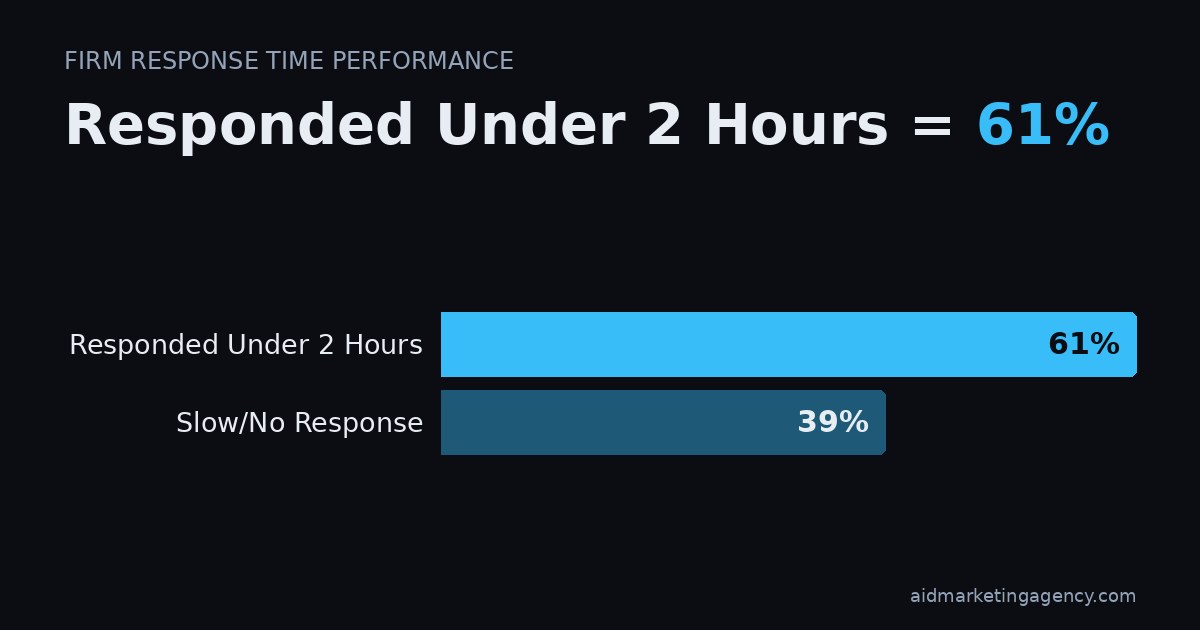
Research from Hennessey Digital (2025) paints a clear picture of how much speed matters. Their study found that the fastest businesses respond within 5 minutes, while 39 percent of firms took more than 2 hours to respond or never reached out at all. That 39 percent is basically handing leads to competitors for free.
A pattern common inside Charlotte property management offices: the leasing coordinator fielding new owner inquiries is the same person dispatching tenant maintenance requests. When a tenant calls about a burst pipe at the exact moment a prospective owner calls about a management quote, the tenant wins. The new lead gets voicemail, and by the time anyone circles back, the owner has already called three competitors. The fix is structural, not staffing. Route new-owner calls to a separate notification channel that cannot be preempted by a maintenance emergency.
In the Charlotte market specifically, where owners have dozens of management firms within a 20-minute drive, responsiveness is the primary signal of how a firm will treat their investment. If a firm takes 6 hours to return a call about managing a property, what does that tell the owner about how fast they will handle a tenant maintenance request? The owner does not need to be a marketing expert to draw that conclusion. They just move on to the next number on the list.
Call #1: The New Lead Opportunity
The First Call is the most critical moment in the entire sales process. The owner is actively shopping. They have a problem, they are looking for a solution, and they are calling down a list.

Older research, specifically the MIT-affiliated Lead Response Management Study (2011), found that the odds of qualifying a lead drop dramatically after the first 5 minutes. Recent data from Hennessey Digital (2025) corroborates this, confirming that the window for meaningful engagement in local services remains tight. The 5-minute rule is not a marketing slogan. It is a measurable threshold where contact rates start falling off a cliff.
Here is what happens when a firm misses that window. The owner leaves a voicemail. They hang up and dial the next company. That company answers. By the time the first firm calls back an hour later, the owner has already had a 15-minute conversation with someone else and is halfway to signing. The first firm is now a courtesy callback, not a real contender.
The goal is simple: be the voice they hear first. Not the second voice. Not the voicemail. The first.
Call #2: The Recovery Follow-Up
Even the best firms miss calls. A tenant emergency pulls the leasing agent away. The receptionist steps out for lunch. The after-hours line goes to voicemail because nobody is staffed at 7 PM. These things happen in every shop.
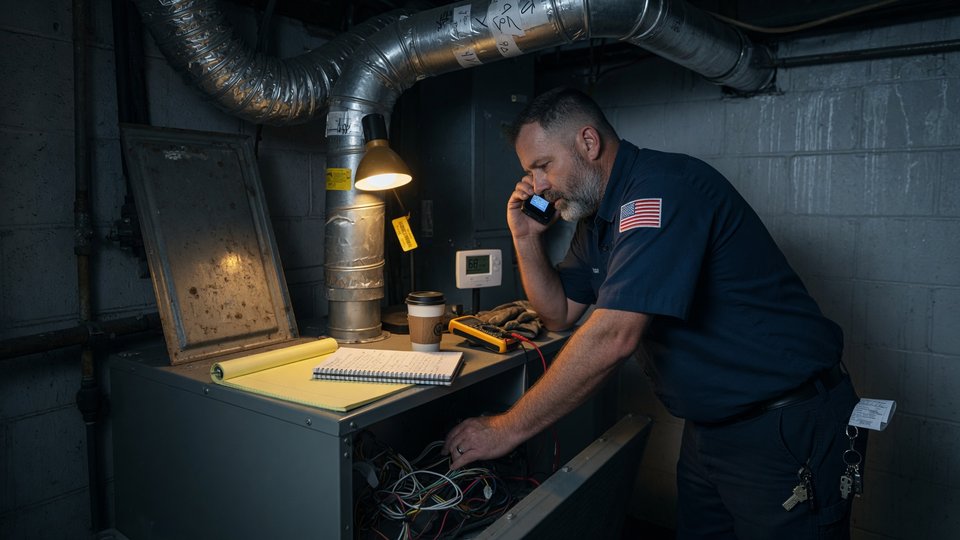
The Second Call is the recovery mechanism, and it is where most firms leave money on the table. A common pattern in high-performing shops is to treat a missed call as an urgent lead, not a lost one. The callback happens within the same hour, not the next morning.
Think of it like this: if a tenant called in a water leak and the manager did not respond for 2 days, that owner would fire the management firm. The same logic applies to sales leads. The owner who just called is testing responsiveness. They want to see if this firm is on top of things. A fast callback tells them yes. A 24-hour callback tells them this firm is overwhelmed, understaffed, or just does not care enough.
For after-hours calls specifically, the stakes are even higher. A prospective owner who calls at 6:30 PM is motivated. They sat down after work, pulled up their laptop, and started researching. If that call goes to voicemail, the motivation cools by morning. A text-back that says "Hey, got your call, we will reach out first thing tomorrow morning" buys time and keeps the lead warm. For more on this, see how Charlotte contractors are winning the missed-call war.
A Practical Look at Lead Decay
To see how response time translates into signed agreements, consider a worked example. Take a hypothetical Charlotte-based firm managing roughly 300 units. Suppose this shop relies on manual callbacks with an average response time of about 4 hours. Now imagine that same firm implements a centralized notification system routing every inbound lead to a single dashboard with instant alerts, bringing its average response time down to under 7 minutes. Based on the research above, a firm making that kind of shift could reasonably expect a meaningful increase in signed management agreements from inbound web leads, because faster response means more conversations while the prospect is still actively shopping.

This is an illustration, not a client result. The point is to show how the research maps onto a real-world firm profile. Faster response means more conversations. More conversations mean more signed agreements. The math is not complicated.
The cost of a missed call is not just one lost management fee. It is the lifetime value of that owner relationship, the monthly management revenue over 3 to 5 years, and the referral network that owner brings with them. One missed call from an owner with a 12-property portfolio is not a single lead. It is a six-figure relationship that just walked out the door. For a deeper look at the math behind a single missed call, check out what a missed call actually costs.
Building Your Playbook
To stop leads from slipping through the cracks, a firm needs systems that remove manual friction. Relying on one person to watch the phone is a recipe for missed opportunities. Here is a practical playbook:

- Centralize every inbound channel. Website forms, Google Business Profile messages, phone calls, and email inquiries should all route to one dashboard. If a lead comes in from any source, the right person sees it instantly.
- Capture missed calls instantly. When a call goes unanswered, an automated text message lets the prospect know their inquiry was received and sets expectations for a callback window. A missed-call text-back is one of the highest-ROI tools for this exact scenario.
- Standardize the first contact. Create a short script for the initial call and the follow-up. Knowing exactly what to say prevents hesitation and keeps the tone consistent every time.
- Set a 5-minute internal SLA. Use the Hennessey Digital (2025) benchmark as the goal. Hitting it consistently puts a firm ahead of the 39 percent of competitors that take hours to respond.
- Staff or automate after-hours. The calls that come in at 7 PM are often the most motivated leads of the day. Either staff the line or use an automated system that captures the lead and schedules a callback for first thing in the morning.
Measuring Success
Improvement requires measurement. Start by tracking the time between a lead inquiry and the first personal outreach. If the current average is measured in hours, the first goal is to bring it down to minutes.
Then look at conversion rates alongside those response times. Older research suggests that leads reached within the first 5 minutes are far more likely to qualify than those contacted even an hour later (MIT-affiliated Lead Response Management Study, 2011). A common pattern among firms that track this data is a direct line between response speed and signed agreements.
The firms that win in Charlotte are not necessarily the ones with the best website or the biggest ad budget. They are the ones that pick up the phone.