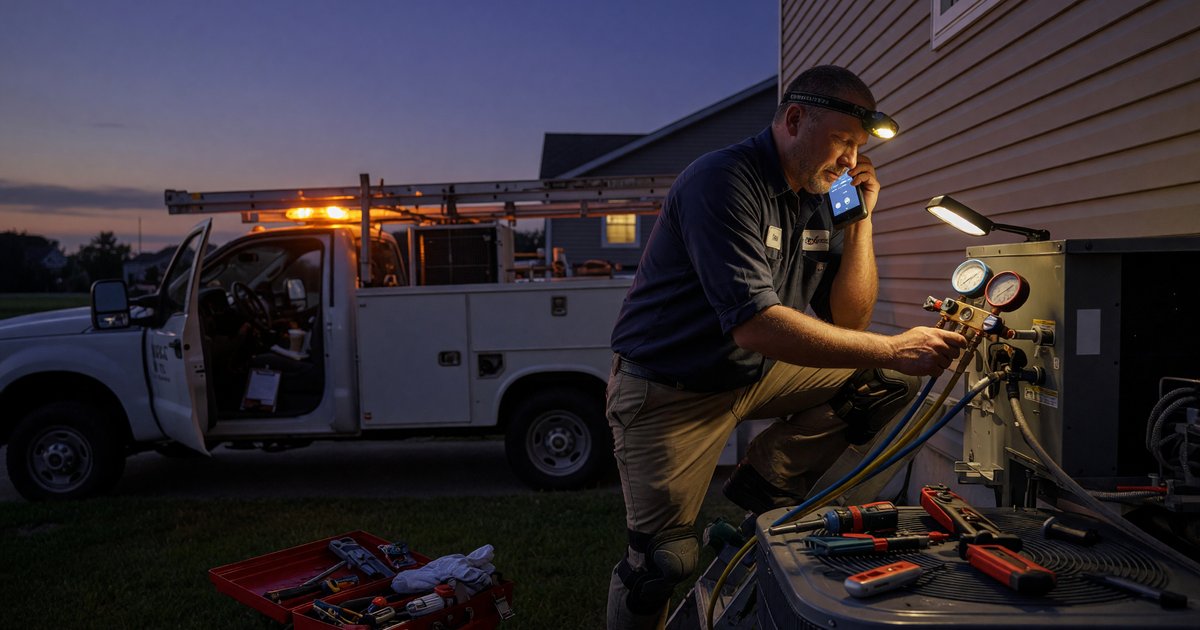
HVAC After-Hours Answering: Turning 9 PM Emergencies Into Booked Mornings
After-hours calls are not just a nuisance; they are a high-intent revenue stream. By applying speed-to-lead principles and professional after-hours protocols, you can capture the 14% of inbound demand that occurs outside business hours and secure morning appointments before your competitors even open their doors.
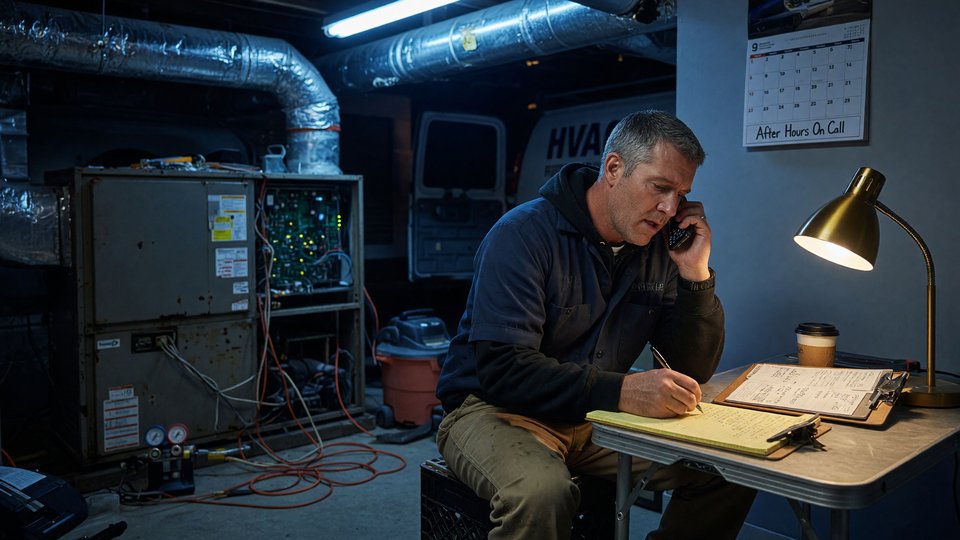
The Reality of After-Hours Demand: Why 9 PM is Your New Prime Time
Many HVAC shop owners view after-hours calls as an inconvenience that disrupts family time or rest. The data tells a different story. Research indicates that 14.1% of inbound calls to residential HVAC shops arrive outside of standard business hours during peak summer months (ServiceTitan, 2025). That is roughly one in seven inbound leads, and every one of them is calling because something just broke.
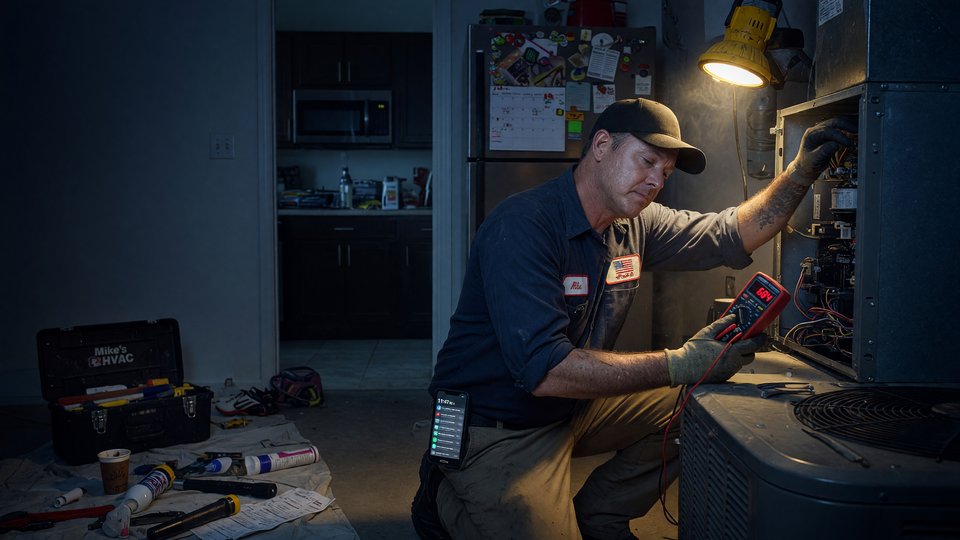
In residential HVAC operations, a consistent pattern emerges across peak summer months: after-hours calls cluster heavily between 6 PM and 10 PM. Homeowners return from work, adjust the thermostat, and discover the system has been running all day without keeping up. The house has been empty since morning, and by the time someone walks in the door, the indoor temperature has climbed well past the set point. The DOE Energy Saver program notes that heating and cooling accounts for about half of a typical home's energy use, which means when a system fails, the comfort impact is immediate and severe. These are not casual inquiries. Every one of them is a household actively looking for help right now.
When you ignore these calls, you are effectively turning away one out of every seven potential customers. If your shop stops answering the phone at 5 PM, you are leaving your most urgent, high-intent leads to be picked up by the first competitor who actually answers.
For Charlotte-area HVAC owners specifically, the after-hours channel is even more critical during the brutal summer months. The Charlotte HVAC after-hours guide breaks down why this channel is often the cheapest growth lever available to a shop that is already running trucks.
The Two Waves of After-Hours HVAC Calls
Not all after-hours calls carry the same intent. A pattern that shows up consistently in residential HVAC is that after-hours volume splits into two distinct waves, and treating them the same way costs shops bookings.
Wave 1: Discovery calls, 6 PM to 8 PM. The homeowner just walked in, dropped their bag, and realized the house is warm. The AC has been struggling all day with no one home to notice. These callers are frustrated but still processing the problem. They may try a few DIY fixes before calling, or they may call right away. Either way, they are evaluating options. They want to know what is wrong, what it might cost, and how soon someone can look at it. This wave converts on information and reassurance: a calm, knowledgeable voice that explains the likely issue and gives a specific arrival time wins the job.
Wave 2: Escalation calls, 9 PM to midnight. The homeowner has been home for two or three hours. They tried adjusting the thermostat, checked the breaker, maybe changed a filter. Nothing worked. The house is getting warmer, the kids need to sleep, and the frustration has turned into urgency. These callers have already self-qualified. They are not shopping for price. They are calling because they need someone to fix this tonight or first thing tomorrow morning, and they will book with whoever sounds competent and available. This wave converts on speed and certainty: the first shop that answers with a concrete plan gets the job.
The implication is straightforward. A shop that treats every after-hours call the same, with a generic voicemail or a flat "we open at 8" message, loses both waves. But a shop that recognizes the difference can tailor its response. Wave 1 callers benefit from a brief triage conversation that buys time and builds trust. Wave 2 callers need an immediate, specific commitment. Routing both waves into the same voicemail box is the equivalent of treating a diagnostic question and a desperate repair request as the same transaction.
The Speed-to-Lead Mandate: Why 5 Minutes Changes Everything
The urgency of an HVAC emergency is real, but the window to capture that lead is narrow. Older research suggests that responding within 5 minutes makes a lead about 21 times more likely to qualify than responding in 30 minutes (Lead Response Management Study, MIT-affiliated, 2007).
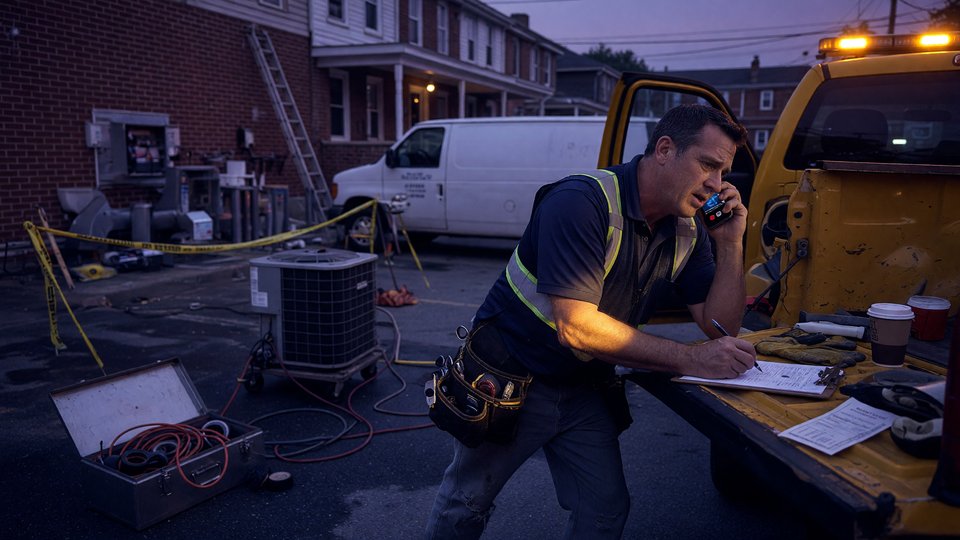
While this research is nearly two decades old, the principle has only intensified. When a homeowner is sitting in a 90-degree house at 9 PM, they are not looking for the best price. They are looking for the first person who picks up the phone and sounds like they have a plan. If you wait until the next morning to return a voicemail, that homeowner has likely already reached out to three other shops. A fast response, even if it is just to confirm a morning arrival, keeps the lead in your pipeline and stops them from calling the next name on Google.
Most contractors do not respond to new leads within that critical 5-minute window, which means shops that do hit this mark immediately distinguish themselves from the vast majority of the market. The 5-minute rule for contractors explains the full math behind why speed beats marketing spend every time, and how to hit that window even when you are on a roof.
The Playbook: How to Handle an After-Hours Emergency Call
Handling an after-hours call requires a shift in mindset from "sales" to "triage." The goal is to provide immediate relief, even if that relief is just a scheduled time for a technician to arrive. The ACCA, the national association for HVAC contractors, maintains standards for professional service delivery that apply just as much to a 9 PM triage call as they do to a daytime service appointment.
- Acknowledge the Emergency: Start by validating the caller's frustration. A simple, "I understand it is hot in your home, let's get this sorted out," goes a long way in calming a stressed homeowner.
- Perform Basic Triage: Ask three to four diagnostic questions to determine if the issue is a true emergency or something that can wait until the morning. Does the system have power? Is there water leaking? Is there a burning smell?
- Set the Hook: If you cannot send a tech out immediately, do not just leave it at "we will call you back." Give them a specific time for the first morning appointment. A concrete answer beats a vague promise every single time.
- Confirm the Details: Always verify the address, the best contact number, and the specific nature of the problem before ending the call. You do not want your morning tech showing up to the wrong house.
For a deeper comparison of your options, the AI receptionist vs answering service vs voicemail breakdown covers seven differences that decide who books the job and who loses it.
Setting Expectations: Converting Tonight's Emergency into Tomorrow's 8 AM Appointment
The biggest mistake contractors make after hours is over-promising or under-communicating. If you cannot provide 24-hour service, be honest about it. Honesty does not mean you have to lose the lead, though.
When you cannot dispatch a technician at 9 PM, clearly explain your morning schedule. "We are currently fully booked for the night, but I can put you at the top of our list for 8 AM tomorrow morning." This creates a firm commitment. When you provide a specific time, the homeowner feels prioritized. If you leave the timing vague, they will keep calling other shops until they find someone who gives them a concrete answer.
The key is making the caller feel like they have been heard and that a plan is in motion. That is the difference between a lead that stays in your pipeline and one that walks to the next shop on the search results page.
Choosing Your Strategy: Answering Services vs Automated Scheduling
You have two primary options for handling after-hours volume: live answering services or automated scheduling systems.
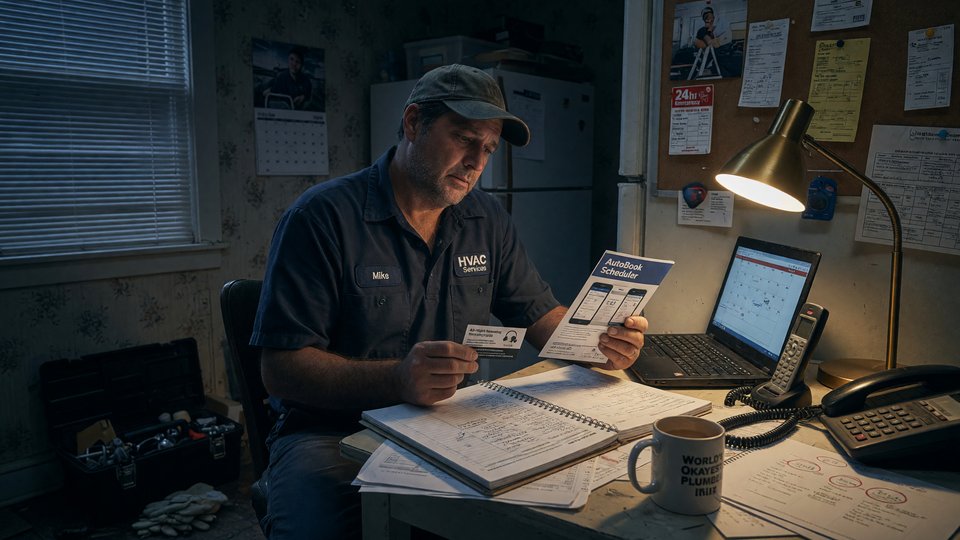
- Live Answering Services: These provide a human touch, which is often preferred by homeowners in distress. A professional agent can follow your custom scripts and capture the necessary details to triage the call. The downside is the cost and the potential for inconsistent service if the agents are not properly trained on your specific business requirements.
- Automated Scheduling Systems: These allow customers to book directly into your calendar. They are highly efficient and eliminate the need for manual data entry. However, they lack the empathy of a human voice. For many shops, a hybrid approach works best: an automated system for simple inquiries, with an option to escalate to a live person if the caller indicates a severe emergency.
Regardless of the strategy, the most important factor is consistency. Your after-hours process should be as professional and reliable as your daytime operations. The 2026 contractor AI stack guide covers what to automate first, second, and never when building this kind of pipeline, so you are not guessing at the order.
A missed-call text-back is a common starting point for shops that want to capture after-hours leads without adding staff. The setup is simple: when a call goes unanswered, the caller receives an automatic text acknowledging the call and offering a next step, which keeps the lead warm until someone can follow up.
What One Missed After-Hours Call Actually Costs
The 14.1% after-hours call figure (ServiceTitan, 2025) is the only hard number needed to understand the scale of the problem. If roughly one in seven inbound calls arrives after hours, and most shops do not answer them, those calls do not sit in a queue waiting for morning. They go to voicemail, and the caller hangs up and dials the next result on Google.
Worked example (illustration, not a client result): A shop taking 200 inbound calls per week during peak summer sees roughly 28 of those calls outside business hours, based on the 14.1% after-hours figure (ServiceTitan, 2025). If the shop answers none of them, those 28 callers hang up and dial the next name on Google. Capturing even half means 14 booked jobs that would otherwise not exist in the pipeline. Over a 12-week summer season, that is 168 additional jobs from a channel the shop was previously ignoring entirely.
The compounding effect is what makes this expensive. A single missed after-hours call is one lost job. But across a peak summer week, the shop that lets after-hours calls roll to voicemail is handing a meaningful slice of its highest-intent leads directly to competitors. These are not tire-kickers or price shoppers. They are homeowners with a broken system who need help tonight and will book with whoever answers.
The real cost is invisible to most shop owners because the calls simply disappear. There is no CRM entry, no follow-up task, no lost-deal review. The revenue walks out the door without a trace. The only way to see the leak is to track after-hours call volume against after-hours bookings. If 14% of calls come in after hours but near zero percent of bookings originate from that window, the gap is the leak.
For more on the full cost of a missed call, the missed call cost breakdown for roofers applies the same logic to roofing and the math translates directly to HVAC.