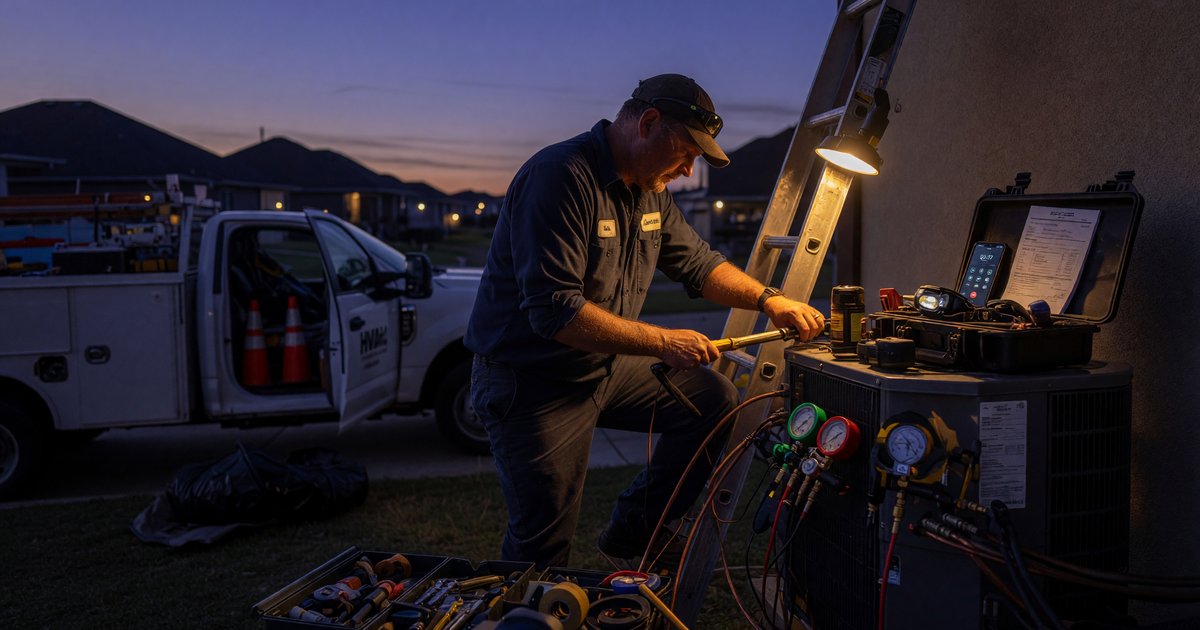
Capturing after-hours leads is the fastest way to increase your revenue without spending a single extra dollar on advertising. In the competitive Charlotte HVAC market, most contractors stop answering the phone at 5 PM. By fixing this gap, you can turn missed opportunities into booked jobs while your competitors are still sleeping.
The Charlotte HVAC Market: Why After-Hours Leads Matter
Charlotte is a high-growth market, but local HVAC operations often hit a ceiling because of the 5 PM cutoff. When a homeowner in Dilworth or Ballantyne experiences an AC failure on a Tuesday evening, they do not wait for business hours. They call the first three companies that appear in their search results, often through Google Business Profile listings or local service ads. If a shop does not answer, that lead is handed to the competitor who does.
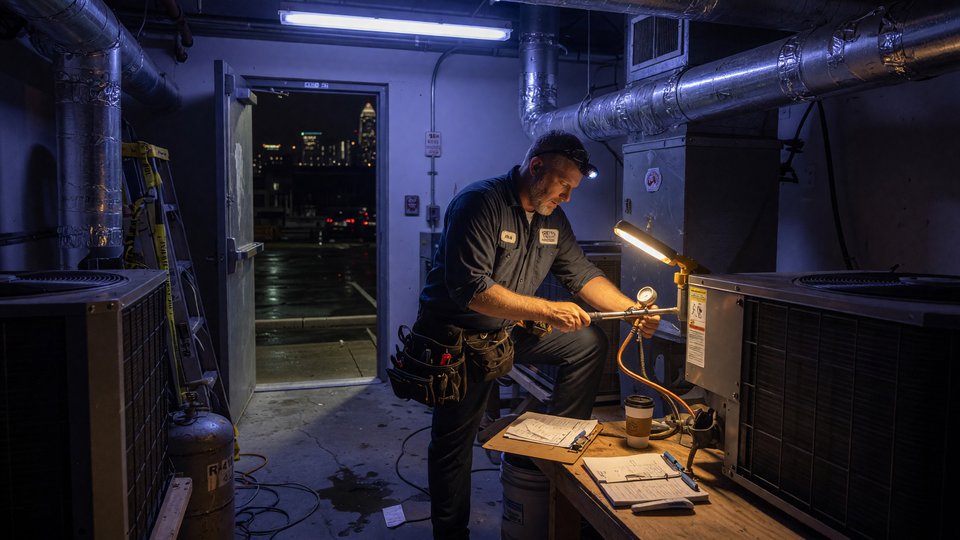
Many owners treat after-hours calls as a nuisance. In reality, these calls represent high-intent leads. A homeowner calling at 8 PM is not window shopping for a new system. They are in a state of immediate need. Capturing this demand is a fast way to increase revenue without spending more on Google Ads or local service ads.
Charlotte contractors face the same missed-call problem as trades nationwide. For a broader look at how local shops are tackling this, see How Charlotte Contractors Win the Missed-Call War.
The Cost of Silence: Understanding Missed Call Benchmarks
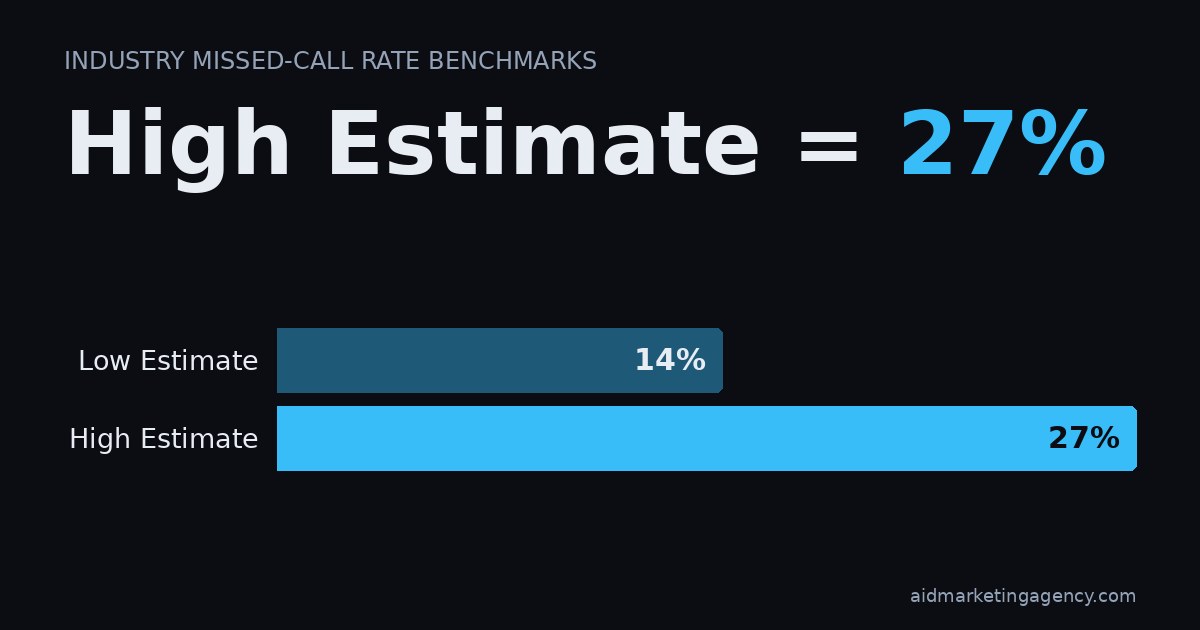
The missed-call problem is a structural weakness in the home services industry. Recent industry benchmarks from contractor-platform datasets show a persistent gap in lead response, with reported missed-call rates ranging from 14 percent to 27 percent depending on the platform and specific methodology (ServiceTitan, 2025).
When a call goes to voicemail, the customer rarely leaves a message. They move to the next name on the list. Older research from the MIT-affiliated Lead Response Management Study (Velocify, 2012) suggested that the odds of converting a lead drop dramatically within the first few minutes. A common pattern in the trades is that faster responses still win more jobs today, even though the original study is over a decade old.
Worked example (illustrative, not a client result): Consider a Charlotte HVAC shop receiving 200 inbound calls per month. If 20 percent of those calls arrive after hours and the missed-call rate sits at the high end of the industry benchmark at 27 percent (ServiceTitan, 2025), that shop loses roughly 11 after-hours leads per month. Assuming a conservative average repair ticket of $400, the monthly revenue gap runs about $4,400. Over a full year, that exceeds $50,000 in jobs that went to whoever picked up the phone first.
Every call missed after hours is a direct transfer of potential revenue to a competitor who has invested in a better response system. For a detailed breakdown of what a single missed call can cost a trades business, see What a Missed Call Actually Costs a Roofer in 2026. The math applies to HVAC just as much as roofing.
How to Audit Your Current After-Hours Performance
Before investing in new tools, it is necessary to understand exactly how many opportunities are currently being lost. Start by reviewing call logs from the last 30 days. Specifically, look for calls that came in between 5 PM and 8 AM.
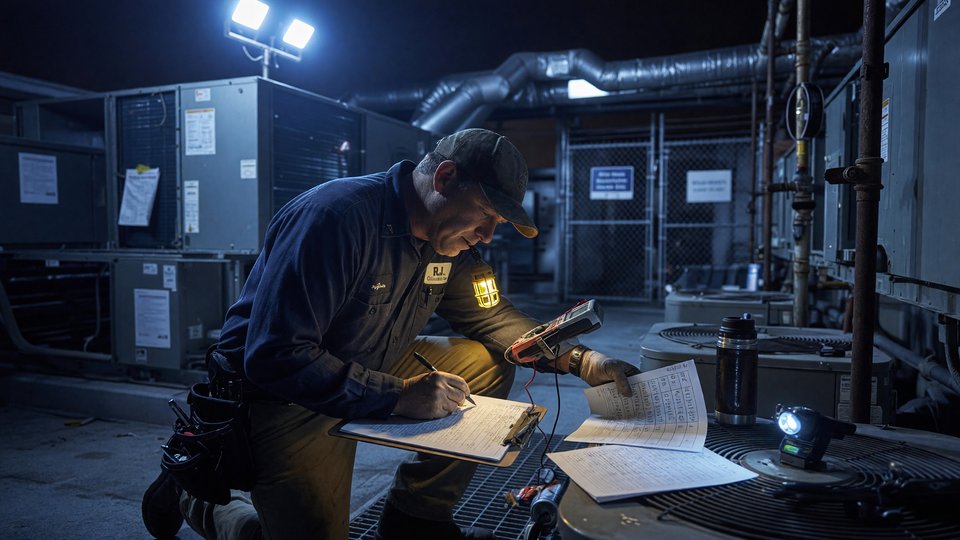
- Calculate the missed-call rate: Divide the number of calls that went to voicemail by the total number of calls received during off-hours. This gives a clear picture of how much demand is slipping through the cracks.
- Identify peak hours: Are most leads lost at 6 PM or 2 AM? Knowing this helps determine if a full 24-hour solution is needed or just a few extra hours of coverage. Many shops discover that the bulk of missed calls come in a narrow window right after closing.
- Listen to voicemails: How many callers actually left a message? If the number is low, customers are likely hanging up and calling someone else immediately. This is a strong signal that voicemail is not a viable capture strategy.
This audit provides the baseline needed to justify an investment in better coverage. Without it, any spending on after-hours solutions is a guess.
Building a Low-Cost After-Hours Response Strategy
A massive call center is not required to fix an after-hours problem. Many HVAC shops find success by layering simple, automated solutions with human support.
- Missed-call text-back: A missed-call text-back ensures that every caller receives an immediate acknowledgment, even if the phone cannot be picked up. It keeps the conversation alive and prevents the customer from moving to the next competitor. The caller gets a text within seconds saying someone will follow up, which buys time without losing the lead.
- Tiered answering services: Use a professional answering service that understands the HVAC industry. They can handle basic scheduling and triage, escalating only the true emergencies to an on-call technician. This filters out the non-urgent calls that would otherwise wake up a tech at 3 AM for a question that could wait until morning.
- On-call rotation efficiency: Ensure technicians have the tools to book calls directly from their mobile devices. If they have to call the office to confirm a slot, the speed-to-lead advantage is lost. A tech who can confirm a booking from their phone in under a minute will close more jobs than one who has to loop through a dispatcher.
The goal is to provide a human connection as quickly as possible. When a customer hears a professional voice or receives a helpful, immediate text, their anxiety decreases, and the chance of winning the job increases.
For a deeper comparison of response options, see AI Receptionist vs Answering Service vs Voicemail: 7 Differences That Decide Who Books the Job. For more ways Charlotte small businesses are putting automation to work without adding headcount, see 7 Ways Charlotte Small Businesses Are Using AI Right Now.
The After-Hours Call Pattern in HVAC
A common pattern in after-hours HVAC call logs is that calls do not distribute evenly across the evening. They cluster in two distinct windows, and understanding this shape changes how a shop should invest in coverage.

The first window runs from 5 to 8 PM. These are homeowners who just got home from work, walked inside, and discovered the AC is not cooling. The call is urgent but not catastrophic. The house has not reached an unbearable temperature yet, and the homeowner has some patience. They want a same-day appointment, not necessarily a midnight truck roll. Many shops accidentally cover this window because someone is still in the office finishing paperwork or locking up.
The second window runs from 10 PM to 2 AM. These are the highest-intent leads a shop will ever receive. A homeowner calling at 1 AM is not shopping for quotes. The bedroom is 82 degrees, nobody can sleep, and they need help right now. They will book with whoever answers first, and they will not call back in the morning. This window goes completely uncovered at most shops.
A detail that shows up consistently when shops pull these logs: late-night callers almost never leave voicemails. The callback list from the 10 PM to 2 AM window is typically empty or near empty. By the time the office opens at 7 AM, the customer has already booked with the first company that picked up. Calling back those missed numbers the next morning produces a disconnected conversation, because the job is already scheduled. This is the window where speed is not a competitive advantage. It is the only option.
This pattern matters because it tells you where to focus your investment. If the audit shows that most missed calls come in the 10 PM to 2 AM window, a simple text-back system that captures the lead and promises a callback at 7 AM may be enough for the early-evening window. But the late-night calls require either a live answer or an automated booking path that can secure the job before the customer dials the next number. The customer at 1 AM is not going to wait for a 7 AM callback. They need confirmation that help is coming, even if it arrives at 8 AM.
Leveraging Speed-to-Lead to Win More Jobs
Speed-to-lead is the tactical application of being available when the customer needs service. In Charlotte, where the HVAC market is saturated with providers, the company that answers first wins. By automating an initial response, a system is created that works while the team sleeps. This is a low-cost growth channel. Leads are not being purchased. The leads already being paid for are simply being harvested instead of ignored.
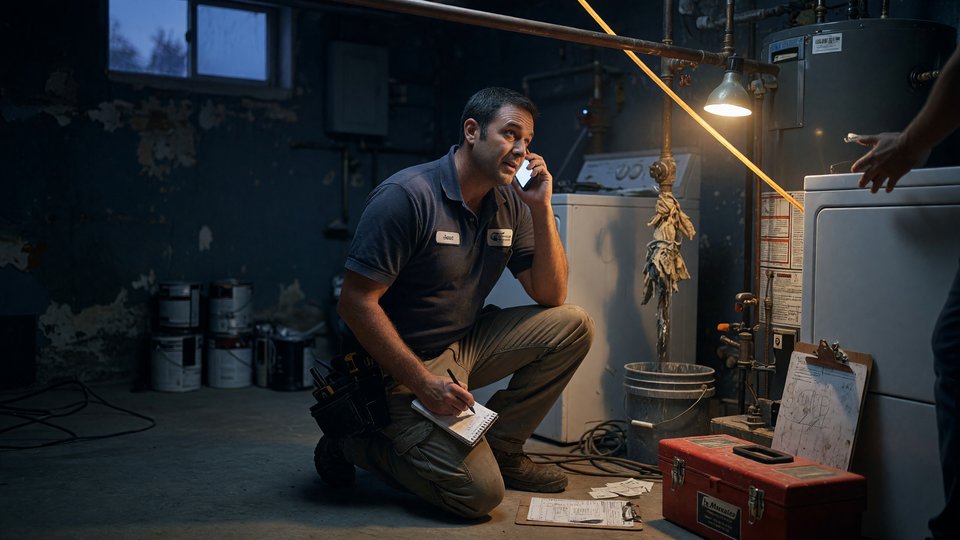
The five-minute window after a lead comes in is where most shops lose or win the job. For the full breakdown on why speed beats marketing spend, see The 5-Minute Rule: Why Speed-to-Lead Beats Marketing Spend. The same principle applies to after-hours calls: the first contractor to respond gets the booking.
For the national playbook on scaling these systems across a contractor operation, see AI Speed-to-Lead for Contractors: The 2026 Playbook.
Measuring Success: Tracking ROI from Off-Hours Conversions
To treat after-hours coverage as a growth channel, it must be tracked like one. Do not lump after-hours revenue in with general service revenue. If the numbers are blended, the after-hours investment looks like a cost center instead of a profit center.
- Tag leads: Use a CRM to tag every lead that comes in after hours. This is the foundation of everything else. Without a tag, there is no way to separate after-hours performance from daytime performance.
- Track conversion rates: Monitor how many of these tagged leads turn into booked jobs compared to daytime leads. In many shops, after-hours leads convert at a higher rate because the customer has immediate need and fewer options.
- Calculate cost per acquisition: Compare the cost of the after-hours solution against the revenue generated from these specific leads. If the monthly cost of a text-back tool or answering service is less than the revenue from one or two additional service calls, the system pays for itself.
If the cost of coverage is a modest monthly fee and it results in just one extra repair job, the system has paid for itself. Everything else is profit. The key is to measure it honestly so the decision to keep or expand coverage is based on real numbers, not assumptions.